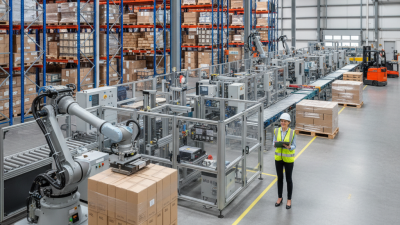
Choosing the right automated guided vehicle in 2026 requires more than comparing payload ratings or promotional videos. Global buyers must connect vehicle design with real warehouse conditions, labor patterns, and long-term service needs. A compact tugger may move carts efficiently in a factory, while a pallet carrier may perform better in a distribution center. The difference appears on the floor.
This guide examines major automated guided vehicle types, including towing vehicles, unit-load carriers, pallet trucks, forklifts, and hybrid mobile platforms. It considers navigation methods, turning radius, battery behavior, charging routines, floor quality, and integration with warehouse management systems. Experienced engineers usually begin with a site survey. They measure aisle width, ramp angles, traffic density, load stability, and pedestrian crossing points. Small details matter.
No single vehicle fits every operation. That assumption often creates expensive redesigns. A model that works well in a clean European plant may struggle with dust, uneven flooring, or seasonal temperature changes elsewhere. Buyers should request documented test results, operator training plans, maintenance response times, and spare-parts availability. Ask difficult questions.
Reliable suppliers should explain safety functions clearly and support compliance with applicable local requirements. They should also provide realistic performance data, not only maximum speed figures. This article helps global purchasing teams compare vehicle types with practical judgment. Some recommendations may need adjustment after a physical trial. That is not a weakness; it is responsible decision-making. The best investment balances productivity, safety, flexibility, and verified lifecycle value.
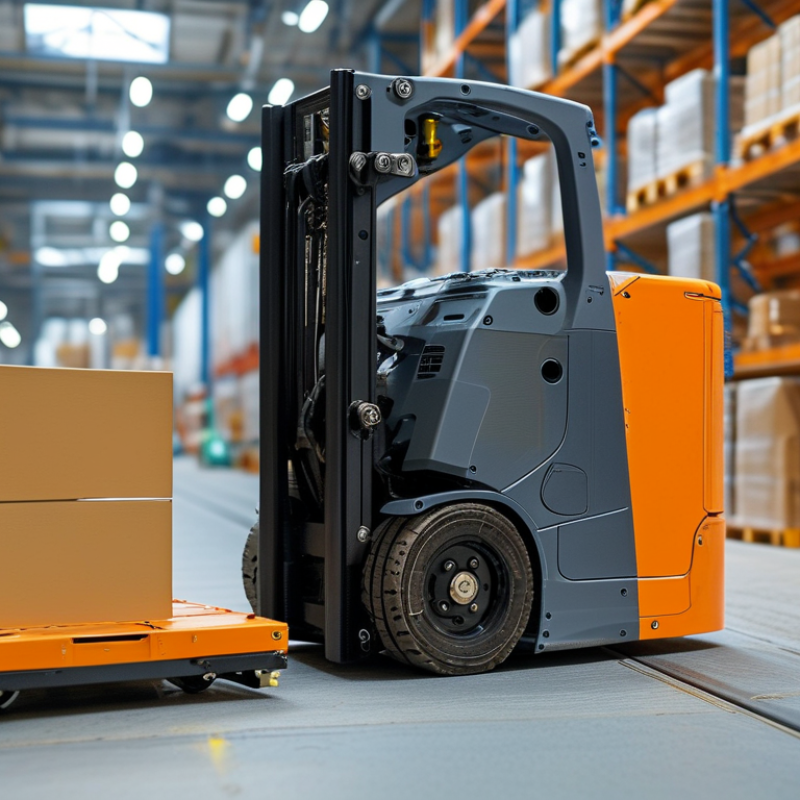
An automated guided vehicle, or AGV, is a mobile industrial machine that transports materials along controlled routes. It uses sensors, onboard controllers, drive systems, and navigation references. Its purpose is practical: reduce repetitive manual movement, improve flow, and support safer material handling.
A typical AGV receives a transport order from a warehouse or manufacturing system. The vehicle identifies its route through magnetic guidance, reflectors, QR markers, laser navigation, or mapped environmental data. It then adjusts speed, stops near obstacles, and delivers its load to a defined station. Charging may occur during scheduled breaks or through opportunity charging. Human supervision remains important. No AGV is truly independent in every situation.
The International Federation of Robotics reported nearly 205,000 professional service robots sold in 2023. Transportation and logistics applications represented about 113,000 units, rising 35% year over year, according to World Robotics 2024. These figures show strong demand, but they do not guarantee equal value for every facility. A narrow aisle, uneven floor, changing pallet sizes, or weak network coverage can reduce performance. This is often overlooked.
Global buyers should examine payload, turning radius, navigation stability, emergency stopping, fleet coordination, and service access. A faster vehicle is not always better. The best choice depends on actual routes, traffic patterns, labor practices, and maintenance capability. Pilot testing is still essential. Specifications can look precise, yet operating conditions remain imperfect.
2026 Best Automated Guided Vehicle Types for Global Buyers
Major AGV Types Classified by Navigation and Vehicle Design
AGVs are easier to compare when navigation and vehicle design are reviewed separately. Magnetic tape systems follow fixed routes and suit repeatable movement between loading points. QR-based vehicles read floor codes and can change routes with updated software. Laser-guided models use reflectors, while SLAM navigation maps changing spaces without fixed markers. In busy facilities, laser or SLAM systems usually offer greater flexibility, but they require careful site mapping and obstacle control.
Vehicle design should match the material, not the catalog image. Tugger AGVs pull several carts across long warehouse lanes. Unit-load models carry containers directly and work well beside conveyors. Fork-type AGVs lift pallets, while low-profile vehicles move beneath racks or custom carts. Check payload, fork height, turning radius, floor flatness, and docking tolerance. A small mismatch can cause repeated stops. No classification is perfect. Real sites often need mixed vehicle designs.
Tips: Walk the proposed route before selecting navigation. Record aisle width, floor joints, lighting, pedestrian crossings, and loading heights. Test with the heaviest real pallet, not an ideal sample. Ask for safety validation records, maintenance access, battery performance, and operator training details. Software promises can sound precise, yet practical trials reveal blind spots. A pilot route is rarely wasted. It may expose weak docking logic, poor traffic rules, or a design that looked efficient only on paper.
Choosing an automated guided vehicle begins with workflow, not vehicle appearance. Map load weight, dimensions, travel distance, floor condition, and handoff points. A pallet warehouse may need towing or pallet transport, while a factory may require precise line-side delivery. Hospitals often prioritize quiet movement, hygiene, and controlled access. Cold-storage sites add battery performance and condensation concerns. Measure peak demand, not average demand. Peak periods expose weak planning.
Safety requirements should match people, equipment, and traffic density. Consider scanners, speed limits, emergency stops, and safe separation distances. Confirm the AGV can navigate ramps, narrow aisles, uneven joints, and changing routes.
Integration matters as much as navigation. Check communication with warehouse, manufacturing, or inventory software. Ask how tasks are assigned when networks fail. Manual recovery must be clear. It is often overlooked.
Buyers should compare payload stability, charging method, battery life, service access, training, and spare-part availability. Evaluate total workflow cost, including floor markings, docking changes, and operator time. Request a site trial with real loads and real shift patterns. A smooth demonstration proves little. Pilot data may reveal blocked aisles, poor handoffs, or slow charging. Some specifications will need revision. That is useful, not failure. The best selection fits today’s process while leaving room for safer, measurable improvement.
Choosing an AGV starts with the load, route, and working environment. Tugger AGVs suit repeated trailer or cart movement across long factory lanes. Pallet AGVs handle standardized loads near storage racks and production lines. Unit-load vehicles work well for cartons, totes, and small containers. Forklift AGVs can serve higher storage positions, but require stricter floor checks and load validation. The best choice depends on measurable site conditions, not catalogue capacity.
Safety must be tested during real operations. Use protective scanners, emergency stops, warning lights, and controlled speed zones. Check blind corners, pedestrian crossings, floor gaps, and changing lighting conditions. Every vehicle should support a documented risk assessment and local machinery requirements. Fleet control should show vehicle locations, task status, battery levels, and fault history. Useful systems also prevent deadlocks and keep priority traffic predictable.
It sounds simple.
Integration often decides whether an AGV project succeeds. Confirm communication with the warehouse, manufacturing, and enterprise systems before purchase. Define how missions, inventory updates, alarms, and manual overrides will move between platforms. Open interfaces help, but “open” does not always mean effortless. Site mapping, network coverage, charging space, and cybersecurity need practical testing. Run a pilot with normal loads, peak traffic, and intentional faults. Some plans still underestimate human behavior. Operators may block routes, change pallets, or bypass instructions, so training and clear recovery procedures remain essential.
2026 Best Automated Guided Vehicle Types for Global Buyers
Global AGV buying decisions now depend on application details, not attractive catalog photos. Pallet AGVs suit fixed warehouse routes and heavy loads. Tugger AGVs move several carts between production zones. Forklift AGVs support pallet storage, but require accurate rack mapping. In flexible facilities, autonomous mobile robots may offer faster layout changes. A reliable evaluation begins with payload, aisle width, floor condition, traffic, and charging requirements.
Purchase costs vary widely. A basic unit may cost $25,000–$60,000, while forklift models can exceed $100,000. Installation, software, batteries, safety scanners, training, and maintenance can add 30% or more. Supplier quality matters. Request site references, response-time terms, spare-parts availability, cybersecurity controls, and documented compliance for your operating region. A low quotation is not always economical. I would also calculate downtime costs, which many early budgets miss.
Tips: Run a small pilot before full deployment. Measure trips per hour, charging delays, operator acceptance, and near-miss events. Ask suppliers to explain failure recovery in plain language. Future systems will use better fleet coordination, predictive maintenance, digital twins, and safer human-machine interaction. However, promised intelligence still depends on clean data and disciplined processes. That part is often underestimated. Recheck every assumption after the pilot.
Comparative guide for selecting automated guided vehicle (AGV) platforms by payload, navigation method, operating environment, investment level, and expected deployment requirements.
| AGV Type | Typical Payload | Typical Speed | Common Navigation | Primary Applications | Indicative Equipment Cost per Unit (USD) | Typical Deployment Time | Charging and Runtime | Key Buying Considerations | 2026–2030 Development Trend |
|---|---|---|---|---|---|---|---|---|---|
| Tow Tractor AGV | 1,000–50,000 kg of towed load | 3–12 km/h | Magnetic tape, laser navigation, reflector-based navigation, or natural-feature navigation | Line-side delivery, airport logistics, warehouse trains, factory-to-factory transport, and multi-cart material movement | US$35,000–120,000, excluding carts, site modifications, and software integration | 3–9 months for a multi-route industrial project | Lead-acid or lithium-ion battery options; normally 6–16 hours of operation per shift depending on towing load and duty cycle | Check turning radius, coupling safety, floor conditions, pedestrian separation, route width, and maximum gradient | More autonomous cart recognition, traffic coordination, pedestrian detection, and mixed-fleet management |
| Unit-Load AGV | 500–2,000 kg | 0.8–2.0 m/s | Laser-based navigation, QR or reflector navigation, magnetic guidance, or natural-feature navigation | Pallet transfer, storage-and-retrieval support, production replenishment, and dock-to-stock movement | US$45,000–140,000, excluding racks, conveyors, and warehouse-management integration | 3–8 months | Lithium-ion batteries are common; opportunity charging can support near-continuous operation in three-shift environments | Evaluate pallet quality, load overhang, transfer-height tolerance, docking accuracy, and interface compatibility | Higher navigation flexibility, automatic pallet-quality inspection, and real-time fleet optimization |
| Forklift AGV | 1,000–3,000 kg | 0.8–2.0 m/s | Laser navigation, natural-feature navigation, 2D or 3D LiDAR, and safety laser scanners | Automatic pallet storage, trailer loading and unloading, cross-docking, and warehouse replenishment | US$80,000–200,000, excluding warehouse-control software and facility changes | 5–12 months | Electric battery systems are typical; practical runtime is commonly 6–12 operating hours, subject to lifting frequency and load | Confirm rack compatibility, fork-pocket tolerances, floor flatness, fire-safety requirements, load stability, and manual-vehicle interaction rules | Improved 3D perception, autonomous trailer handling, safer mixed traffic, and more adaptable pallet identification |
| Automated Pallet Truck | 1,000–2,500 kg | 0.8–1.8 m/s | Laser navigation, QR-marker navigation, magnetic guidance, or natural-feature navigation | Horizontal pallet transport, staging, receiving, dispatch, and short-distance warehouse transfers | US$35,000–90,000, excluding software, charging infrastructure, and commissioning | 2–6 months | Lithium-ion battery and opportunity charging are widely used; runtime depends on travel distance, load, and charging policy | Best suited to repetitive horizontal routes; verify ramp performance, pallet condition, aisle width, and docking repeatability | Greater use of autonomous pallet detection, dynamic route planning, and rapid installation without extensive fixed infrastructure |
| Counterbalance AGV | 1,000–3,500 kg | 0.8–1.8 m/s | LiDAR-based natural navigation, reflector navigation, and safety-rated onboard sensing | Open-floor pallet handling, production logistics, loading areas, and locations where standard forks cannot approach from underneath | US$90,000–220,000, excluding integration and facility upgrades | 5–12 months | Electric battery operation; charging strategy should account for lifting energy, load weight, and continuous-shift requirements | Consider vehicle stability, turning envelope, floor load capacity, operator exclusion zones, and automatic load verification | More precise load handling, improved obstacle classification, and better integration with enterprise warehouse systems |
| Heavy-Duty Platform AGV | 2,000–50,000 kg | 0.3–1.5 m/s | Laser navigation, magnetic guidance, embedded wire, or hybrid navigation | Steel, automotive, aerospace, machinery, mold, and other heavy manufacturing environments | US$100,000–400,000+, depending on payload, platform size, steering system, and safety package | 6–18 months | High-capacity battery packs or opportunity charging; operating time varies substantially with payload and floor conditions | Assess structural load distribution, floor strength, emergency stopping distance, load securing, route clearance, and maintenance access | Higher payload density, modular drive units, digital twins, predictive maintenance, and coordinated multi-vehicle transport |
| Assembly-Line AGV | 300–2,000 kg | 0.2–1.0 m/s | Magnetic guidance, QR markers, laser navigation, or software-defined natural navigation | Work-in-process transfer, synchronized assembly, kitting, sequencing, and ergonomic workstation replenishment | US$40,000–150,000, excluding tooling, fixtures, and production-line integration | 4–12 months | Battery or wired power options; battery systems can use opportunity charging during buffer or workstation stops | Prioritize positioning repeatability, cycle-time synchronization, fixture design, safety-rated speed control, and changeover flexibility | More flexible production layouts, automatic fixture identification, and closer connection with manufacturing-execution systems |
| Mobile Robot with AGV-Style Fleet Control | 50–1,500 kg | 0.5–2.5 m/s | SLAM using LiDAR or cameras, often combined with QR markers and safety scanners | Flexible warehouse transport, goods-to-person workflows, kitting, e-commerce fulfillment, and variable-route delivery | US$20,000–100,000, excluding racks, application modules, and software integration | 1–6 months for a standard deployment; longer for complex integration | Lithium-ion batteries with automatic charging; runtime often ranges from 6–12 hours depending on model and workload | Suitable for changing layouts, but validate localization reliability, network coverage, rack tolerances, traffic rules, and software interoperability | Convergence of AGV and AMR functions, cloud fleet analytics, easier reconfiguration, and AI-assisted traffic management |
| Cleanroom AGV | 100–1,000 kg | 0.2–1.0 m/s | Laser navigation, magnetic guidance, embedded wire, or high-accuracy marker navigation | Semiconductor, pharmaceutical, medical-device, laboratory, and controlled-environment material handling | US$100,000–350,000+, depending on cleanroom class, payload, enclosure, and validation scope | 6–18 months | Sealed battery systems and controlled charging; battery selection must account for heat, particles, and room classification | Confirm cleanroom classification, particle generation, materials, wheel design, software validation, decontamination, and documentation requirements | More autonomous validation data, lower-particle drive systems, remote diagnostics, and tighter traceability of material movement |
| Outdoor or Yard AGV | 1,000–40,000 kg | 2–15 km/h | GNSS, LiDAR, cameras, radar, geofencing, and hybrid localization | Container yards, outdoor manufacturing logistics, port-related transport, trailer yards, and inter-building movement | US$150,000–500,000+, depending on payload, weather protection, autonomy level, and site infrastructure | 9–24 months | Large battery systems or opportunity charging; energy consumption is strongly affected by distance, weather, gradients, and load | Evaluate weather exposure, road markings, drainage, lighting, communications, GNSS reliability, human traffic, and regulatory requirements | Improved all-weather perception, vehicle-to-infrastructure communication, remote supervision, and autonomous yard orchestration |