7 Best Top Tier Palletizers for Global Buyers
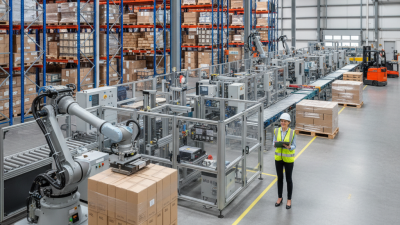
Choosing the right palletizer can shape warehouse speed, product safety, and long-term operating costs. For global buyers, the decision involves more than comparing robotic arms or advertised cycle rates. A reliable top tier palletizer should handle real production conditions, including uneven cartons, changing pallet sizes, dusty floors, and demanding shift schedules. It should also integrate smoothly with conveyors, stretch wrappers, warehouse systems, and existing safety controls.
This guide examines seven leading palletizers through practical buying criteria. These include payload capacity, stacking accuracy, changeover time, floor-space requirements, energy use, maintenance access, and technical support. In a working facility, small details matter. A gripper that leaves marks can damage packaging. A slow format change can interrupt an entire line. Remote diagnostics may save hours when a sensor fails during a night shift. Experience from packaging operations suggests that the cheapest machine is rarely the lowest-cost choice over several years.
Still, no machine fits every factory. Some manufacturers emphasize speed, while others need flexible handling for mixed products. Published specifications can also look better than daily performance. That deserves careful review. Buyers should request application tests, reference installations, safety documentation, and service commitments before signing a contract. Regional electrical standards and operator training must be checked as well. The following seven options offer strong potential, but each should be judged against its actual products, layout, labor model, and future expansion plans. A careful comparison prevents expensive surprises.
Palletizer Basics: 4 Core Types, 30–180 Cases per Minute, and Key Uses
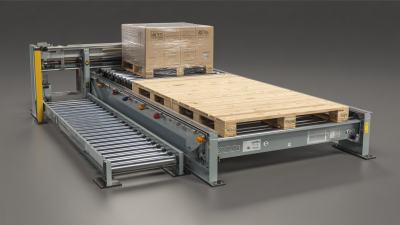
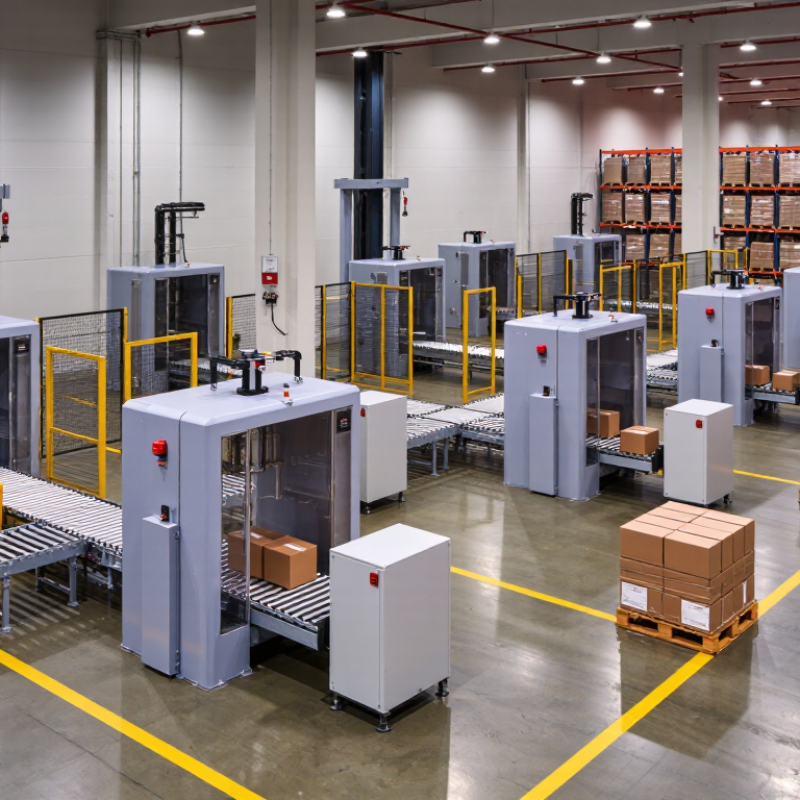
Palletizers turn filled cases into stable loads for storage, transport, and distribution. The right machine depends on case size, speed, stacking pattern, and floor space. Four core types cover most projects: robotic, layer, conventional high-level, and low-level palletizers. Each responds to different production pressures.
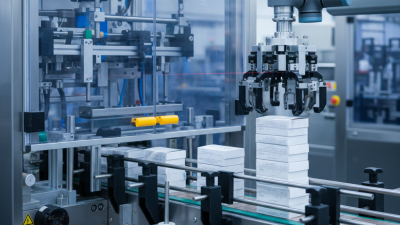
Robotic palletizers use articulated arms, grippers, and programmable patterns. They suit mixed case sizes and frequent product changes. Layer palletizers build complete layers before placing them on a pallet. They can deliver high throughput with consistent cartons.
Conventional high-level systems lift cases above the pallet, while low-level units stack closer to the floor. Low-level designs may simplify access, but they can require more line space. That trade-off is easy to miss.
Typical capacity ranges from 30 to 180 cases per minute. Actual output depends on case dimensions, pallet exchange time, pattern complexity, and upstream flow. A quoted speed can look impressive. It may not survive real stoppages. During site evaluations, measure changeover time, carton slip, corner damage, and operator access. These details often reveal more than specifications.
Common uses include food cartons, beverage cases, household goods, personal-care products, and industrial packages. Sanitary construction matters in sensitive environments. Strong guarding and clear emergency access support safer operation.
Buyers should also check pallet quality, floor loading, maintenance skills, spare-part access, and software compatibility. A controlled test with real cases is usually more reliable than a factory demonstration.
Selection Criteria: Payload, Cycle Time, 99% Uptime, and Global Safety Standards
Choosing among the 7 best top-tier palletizers requires more than comparing advertised speed. Payload must include the product, layer pattern, slip sheets, and gripper. A 25-kilogram case can exceed the robot’s practical limit when acceleration increases. Cycle time should be tested with real cartons, not empty movements. MHI’s 2024 Annual Industry Report found that 55% of respondents planned to adopt robotics and automation within five years, raising expectations for measurable throughput.
A serious buyer should demand uptime evidence. The 99% target sounds impressive, but its definition matters. Ask whether it includes planned maintenance, changeovers, jams, and upstream stoppages. Record mean time between failures and mean time to repair during site trials. IFR reported 541,302 industrial robots were installed worldwide in 2023, showing strong automation demand, but installation volume does not guarantee reliable palletizing. Small delays matter. Ten seconds per cycle can become hours each week.
Safety must cover every operating mode. Verify risk assessment, guarding, interlocks, emergency stops, and safe recovery procedures against ISO 12100, ISO 10218, and applicable regional requirements. Check electrical compliance under IEC 60204-1. Global projects also need language-ready controls and documented training. Reach, changeover time, spare-parts access, and remote diagnostics deserve equal attention. In practice, the fastest machine may lose value if operators need tools for every format change. I would also question any uptime claim without maintenance records. Numbers need context.
7 Best Top Tier Palletizers for Global Buyers - Selection Criteria: Payload, Cycle Time, 99% Uptime, and Global Safety Standards
Indicative performance benchmarks for comparable industrial palletizing configurations. Actual results depend on product format, pallet pattern, conveyor layout, controls, and validation testing.
| Rank / System Profile |
Nominal Payload
(kg) |
Typical Throughput
(cases/min) |
Cycle Time
(sec/pick) |
Target Availability |
Supported Load Types |
Global Safety Framework |
Best-Fit Application |
| 1. High-Speed Gantry Profile |
50–150 |
80–120 |
0.50–0.75 |
≥99% |
Cases, cartons, trays |
ISO 10218-1/2; ISO 13849-1 PL d; IEC 60204-1; ANSI/RIA R15.06 |
Beverage and high-volume food lines |
| 2. Heavy-Payload Robotic Profile |
80–250 |
35–75 |
0.80–1.70 |
≥99% |
Bags, sacks, bulk cases |
ISO 10218-1/2; ISO 13849-1 PL d/e; IEC 60204-1; CSA Z434 |
Agricultural, chemical, and building products |
| 3. Flexible Four-Axis Profile |
40–100 |
45–90 |
0.67–1.33 |
≥99% |
Boxes, bundles, multipacks |
ISO 10218-1/2; ISO 13849-1 PL d; EN 415-4; IEC 60204-1 |
Mixed-SKU consumer goods |
| 4. Layer-Handling Palletizer Profile |
100–400 |
60–100 |
0.60–1.00 |
≥99% |
Full layers, slip sheets, pallets |
ISO 12100; ISO 13849-1 PL d/e; IEC 60204-1; ANSI B11.19 |
Uniform high-volume case production |
| 5. Compact Modular Profile |
20–60 |
25–55 |
1.09–2.40 |
≥99% |
Small cartons, cases, bags |
ISO 10218-1/2; ISO 13849-1 PL d; IEC 60204-1; EN 415-4 |
Space-constrained facilities and SMEs |
| 6. Collaborative-Assisted Profile |
5–30 |
10–30 |
2.00–6.00 |
≥99% |
Light cartons, trays, totes |
ISO 10218-1/2; ISO/TS 15066; ISO 13849-1; IEC 60204-1 |
Low-volume, high-mix operations |
| 7. Hybrid Vision-Guided Profile |
30–120 |
30–70 |
0.86–2.00 |
≥99% |
Irregular cases, mixed cartons |
ISO 10218-1/2; ISO 13849-1 PL d; IEC 61496; ANSI/RIA R15.06 |
Variable product dimensions and SKU changes |
Buyer validation note: Confirm payload at the tool center point, measured cycle time under the required pallet pattern, mean time between failures, recovery time, guarding requirements, electrical compatibility, and local conformity assessment before purchase.
Seven Top-Tier Palletizers Compared by Throughput, Flexibility, and Footprint
7 Best Top Tier Palletizers for Global Buyers
Seven Top-Tier Palletizers Compared by Throughput, Flexibility, and Footprint
High-speed layer palletizers deliver the greatest throughput, often exceeding 100 cases per minute. They suit stable products, fixed patterns, and large distribution centers. Robotic palletizers usually handle 20 to 60 cases per minute. Their programming supports mixed sizes, changing pallet patterns, and frequent product shifts. However, cycle speed can fall when cartons arrive unevenly.
Gantry palletizers use overhead movement and cover wide pallet zones without occupying much floor space. Delta-style systems are faster with light cartons, but they need careful product presentation. Collaborative palletizers offer simpler deployment and safer access, although their output may not match traditional robots. Hybrid cells combine robotic flexibility with layer handling for demanding lines. Compact mobile units reduce installation time and fit smaller facilities, but their payload and battery limits require honest planning.
The fastest option is not always the best. I have seen compact lines lose efficiency because operators lacked clear access for film and pallet changes. Measure usable floor space, not just the machine frame. Check carton weight, pallet height, changeover frequency, washdown needs, and local service coverage. A reliable cell should maintain stable placement at the end of a long shift. Small errors matter. A two-centimeter drift can weaken a tall load and create costly rework. Machine data also deserves scrutiny; impressive peak throughput may not reflect real production conditions. Ask for tests using your actual cartons, patterns, and pallet materials.
7 Best Top-Tier Palletizers for Global Buyers
Anonymous palletizer configurations compared by throughput, flexibility, and footprint
The chart uses representative engineering benchmarks for common palletizer configurations. Throughput is measured in cases per hour, footprint in square metres, and flexibility is scored from 1 to 5 based on SKU variety, changeover capability, and pallet-pattern adaptability. Larger bubbles indicate greater flexibility.
Automation Economics: Labor Savings, 2–5-Year Payback, and Total Cost of Ownership
7 Best Top Tier Palletizers for Global Buyers
Automation economics should start with labor, not machine price. A palletizer handling 25 cases per minute can replace repetitive stacking across two shifts. Yet the real saving depends on wages, overtime, turnover, and staffing stability. In a plant audit, calculate paid hours removed, not promised headcount reductions. Training and redeployment also affect the result.
A credible project model includes equipment, integration, conveyors, guarding, installation, energy, maintenance, and spare parts. A system priced at $180,000 may require another $40,000 for integration and site preparation. If it saves $90,000 annually, the simple payback approaches 2.4 years. That figure can change quickly. Lower production volume, seasonal demand, or delayed commissioning may extend payback beyond five years.
Look beyond the purchase order. Total cost of ownership includes changeover time, compressed air, software support, technician travel, and downtime during repairs. Ask for documented cycle rates, acceptance-test records, and references from similar applications. Confirm that local technicians can access critical parts. A strong warranty helps, but response time matters more during a Friday-night stoppage.
Not every top-tier palletizer fits every factory. A compact robotic cell may reduce floor space, while a conventional high-speed unit may deliver better throughput. The spreadsheet is useful. It is not reality. Validate assumptions with production data, maintenance logs, and a controlled trial before approving capital.
Global Buying Checklist: CE, UL, ISO 9001, Energy Use, Service, and Integration
7 Best Top Tier Palletizers for Global Buyers
Global Buying Checklist: CE, UL, ISO 9001, Energy Use, Service, and Integration
A top-tier palletizer should meet the destination market’s compliance expectations. CE marking indicates conformity with applicable European requirements, but it is not a universal quality certificate. For North American projects, request evidence relevant to UL electrical safety requirements. Ask for the exact standard, certificate scope, and tested control-panel configuration. Do not accept a logo alone.
ISO’s 2022 survey recorded more than 1.2 million ISO 9001 certificates worldwide. This supports supplier credibility, but certification cannot guarantee reliable palletizing. Request process records, corrective-action examples, and traceability for motors, sensors, and safety circuits. A factory acceptance test should measure cycle time, layer accuracy, product changeover, and emergency-stop response. Small details matter.
Energy data deserves equal attention. The U.S. Department of Energy reports that compressed-air leaks can waste 20–30% of system output. Compare annual electricity and air consumption at the quoted throughput, not only the machine’s rated power. Integration must include pallet patterns, upstream signals, safety gates, warehouse software, and remote diagnostics. Service response time should be written into the contract. In practice, buyers often overlook spare-part availability and operator training. That is a costly weakness. No checklist is perfect, and real products may vary from factory tests. Verify performance with your own cartons, pallet dimensions, and production speeds before approval.