Best China Case Sealer for Global Buyers?
Choosing the best case sealer for global buyers is not a simple brand exercise. Carton size, board quality, tape performance, production speed, and after-sales support all matter. A machine that performs well in a dry European warehouse may struggle in a humid Asian facility. Small details matter, too. Dusty rollers. Uneven flaps. Operators changing formats by hand.
Jim Pittas, President and CEO of PMMI, has stated, “Packaging machinery is a critical part of the supply chain.” That observation gives this comparison a practical direction. A case sealer is not merely a box-closing device. It influences labor demand, package consistency, line uptime, and shipping presentation. Global buyers should examine sealing accuracy, adjustment time, spare-part access, safety design, and technical training before focusing on purchase price.
This guide compares common case sealer configurations for different operating conditions. It considers semi-automatic and fully automatic models, uniform and random carton handling, tape and hot-melt sealing, and integration with conveyors or packing lines. Performance claims still require caution. A supplier’s sample test may not represent your actual cartons. Ask for trials using your board grades, dimensions, tape, and target speed.
There is no perfect machine.
The better choice is the one that fits the real workflow, not the brochure. Budget, maintenance skills, factory space, and future volume can change the answer. That is where many buying decisions become imperfect, and worth reconsidering.
Case Sealer Types and Applications: Tape, Glue, and Random-Format Systems
Best China Case Sealer for Global Buyers?
Tape, glue, and random-format systems serve different carton realities.
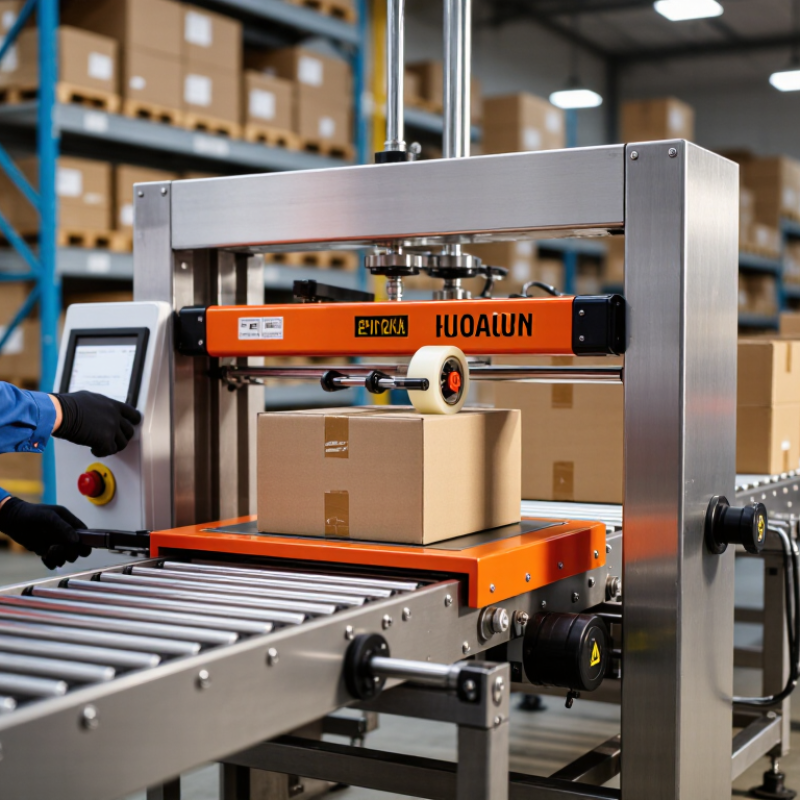
Tape sealers suit uniform boxes, moderate speeds, and simple maintenance. They are easy to inspect visually. However, dusty corrugated surfaces can weaken adhesion.
Glue sealers create a cleaner finish and stronger closure for heavier cartons. They require accurate temperature control, nozzle cleaning, and trained operators.
Random-format sealers adjust automatically when carton dimensions change.
Sensors measure height and width, while servo-driven heads reposition during production. This flexibility matters for e-commerce, where parcel variety keeps increasing.
Pitney Bowes reported 159 billion parcels worldwide in 2022. That volume raises pressure on reliable carton closure. A random-format machine may reduce manual adjustment, but its controls are more complex.
The International Federation of Robotics recorded 553,052 industrial robot installations in 2022, up 5 percent year over year. That growth reflects wider automation investment, including end-of-line packaging.
Global buyers should compare sealing strength, changeover time, compressed-air demand, and spare-parts access. A lower purchase price can become expensive after repeated stoppages.
Small details matter.
Ask for carton samples, speed tests, adhesive trials, and cycle-life records before approval.
No system fits every factory. That is the uncomfortable part.
Core Specifications: Throughput, Box Range, and ISO 22400 OEE Metrics
Best China Case Sealer for Global Buyers?
Throughput should be measured with real cartons, not brochure speed. A sealer rated at 30 boxes per minute may slow near maximum box dimensions. Test mixed carton sizes for one full shift. Record actual output, stoppages, and operator resets. ISO 22400 defines OEE through availability, performance, and quality. A practical target is 85%, often treated as world-class, but many new lines perform lower during commissioning. That gap deserves attention.
Box range matters equally. Confirm minimum and maximum length, width, and height. Measure recycled board too. Its softer edges can affect flap alignment and tape adhesion. A useful acceptance test includes compressed cartons, uneven fills, and dusty surfaces. According to PMMI packaging automation research, labor shortages continue pushing manufacturers toward automated and flexible equipment. Flexibility is not a luxury. It protects throughput when packaging formats change. MHI’s 2024 Industry Report also found that 55% of supply-chain professionals planned higher technology investment, supporting demand for measurable automation.
Tips: Ask suppliers for an ISO 22400 OEE template, not only a speed claim. Track availability by reason code. Separate material faults from machine faults. Check seal pressure, tape overlap, and sensor response every shift. Use your own cartons during testing. Do not rely on a perfect factory sample; real production is less polite. Expect early data to be incomplete, then improve the measurement method.
Best China Case Sealer for Global Buyers? - Core Specifications: Throughput, Box Range, and ISO 22400 OEE Metrics
Global Compliance: CE, UL 508A, ISO 9001, and ISTA 3A Requirements
Best China Case Sealer for Global Buyers?
Global compliance starts before a case sealer reaches your warehouse. The 2023 ISO Survey reported 1,265,216 valid ISO 9001 certificates worldwide. This figure shows how widely controlled quality systems are expected. For a Chinese supplier, ISO 9001 should support traceable drawings, inspection records, corrective actions, and stable sealing performance. CE compliance also requires more than a logo. The manufacturer must identify applicable European requirements, complete risk assessment, prepare technical documentation, and issue a Declaration of Conformity. Ask for evidence, not attractive promises. Details matter.
For North American projects, UL 508A focuses on industrial control panels, wiring, components, and documented construction. It does not automatically certify the entire case sealer. Confirm the panel’s evaluation route and regional electrical requirements. ISTA 3A testing is equally practical for export equipment. Its procedures examine parcel hazards such as vibration, shock, compression, and atmospheric conditioning. A sealer that survives factory testing may still suffer sensor movement after long-distance transport. The 2023 ISO Survey supports process confidence, but it cannot replace machine-specific validation. I would request test records, serial-number traceability, software revision control, and sample packaging trials. One weakness remains: many buyers check certificates late, after the machine design is fixed. That gap matters.
This chart compares the primary compliance scope of four widely recognized frameworks for case-sealing equipment.
A value of 1 indicates that the framework directly addresses the category; 0 indicates that the category is outside its primary scope.
CE marking depends on the applicable European Union legislation, UL 508A focuses on industrial control panels, ISO 9001:2015 covers quality management systems, and ISTA 3A covers packaged-product transport testing.
China Case Sealer Selection: A Weighted Scorecard for Global Buyers
Best China Case Sealer for Global Buyers?
China Case Sealer Selection: A Weighted Scorecard for Global Buyers
Selecting a case sealer from China requires more than comparing catalog prices. A weighted scorecard makes technical and commercial differences easier to examine. In practical factory evaluations, sealing quality should carry the highest weight, around 30 percent. Test cartons with different board thicknesses, filled weights, and surface conditions. A neat seal on one sample proves very little.
Speed may receive 20 percent, but stable performance matters more than a peak cycle rate. Carton size range and changeover time can each receive 15 percent. Safety features, spare-part access, documentation, and remote support deserve the remaining 20 percent. Ask for recorded trials, wiring diagrams, maintenance intervals, and clear delivery terms. Evidence beats attractive claims.
Our early scorecard made one mistake. We gave speed too much influence. The machine looked impressive during a short demonstration, yet adjustments became slow after carton dimensions changed. That experience changed our method. We now measure ten-minute output, seal consistency, noise, operator effort, and recovery after a jam. Small details matter. A practical buyer should also check local electrical compatibility and training quality before approval. No scorecard is perfect, but transparent weights reveal where compromise may be acceptable.