
China Top FFS Woven Sack Manufacturer Supplier?
Choosing a China top Ffs Woven Sack manufacturer requires more than comparing prices. It requires evidence, process knowledge, and careful supplier evaluation. A dependable factory should show consistent fabric weight, stable seam strength, and clean valve forming. These details matter when sacks move through automatic filling lines.
Packaging engineer Zhang Wei explains, “A strong Ffs Woven Sack starts with controlled fabric production, not attractive sales language.” This principle remains practical. Buyers should inspect polypropylene quality, tensile testing records, lamination uniformity, and printing accuracy. Factory audits can reveal more than product samples. Look closely at weaving machines, production records, storage conditions, and worker inspection points.
Small defects can become expensive. A loose seam may spill powder during transport. Uneven coating can affect moisture resistance. Weak packaging creates customer complaints and avoidable waste. It happens.
The best China supplier should provide traceable raw materials, clear quality standards, and documented corrective actions. Certifications may support confidence, but they do not replace direct verification. Ask how the manufacturer manages batch variation, urgent orders, and product changes. Also check whether technical staff understand your filling equipment and end-use conditions.
This guide examines leading Ffs Woven Sack manufacturers through practical criteria, including production capacity, customization, testing, export experience, and communication reliability. Some suppliers look impressive online. Their factory performance may tell a different story. A balanced review must recognize both strengths and limitations.
For agricultural materials, chemicals permitted by applicable regulations, minerals, and industrial powders, sack design should match the product’s density, flow behavior, and handling environment. Responsible sourcing also requires lawful materials and safe manufacturing practices. Choosing well is not simply finding the lowest quotation. It is reducing risk before the first shipment leaves China.
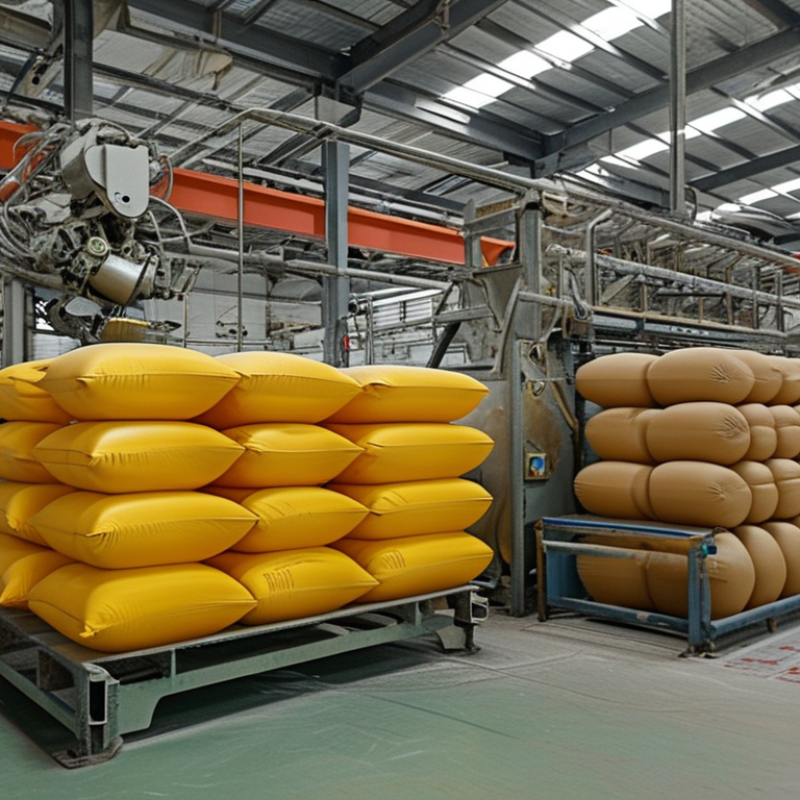
FFS Woven Sacks in China: PP Fabric, PE Film, and ISO 21898 Standards
China Top FFS Woven Sack Manufacturer Supplier?
FFS woven sacks combine a strong PP fabric body with a PE film layer. The fabric carries load, while the film improves moisture resistance. During filling, an FFS machine forms, fills, and seals each sack without manual stitching. Stable fabric width and controlled film thickness matter. A few millimeters can affect sealing quality.
ISO 21898 specifies performance requirements and testing methods for flexible intermediate bulk containers. However, an FFS sack is not automatically compliant because it uses certified raw materials. Suppliers should document tensile strength, seam performance, drop testing, and safe working load. In our experience, sample testing with the customer’s powder is essential. Lab results alone can miss dust leakage or poor heat sealing.
The OECD’s Global Plastics Outlook reports 353 million tonnes of plastic waste in 2019. Packaging represented roughly 40% of plastic use. UNEP’s 2023 Turning off the Tap report also says plastic pollution could fall by 80% by 2040 through reuse, recycling, and better design. These figures place pressure on PP and PE packaging suppliers. Lightweight construction, recycled-content trials, and accurate material records can help. Yet recycled resin may reduce strength or sealing consistency. That weakness deserves honest testing. A reliable China supplier should provide batch traceability, inspection records, and practical production evidence, not only polished certificates.
China Top FFS Woven Sack Manufacturer Supplier? - FFS Woven Sacks in China: PP Fabric, PE Film, and ISO 21898 Standards
| Data Dimension | Typical Specification or Fact | PP Woven Fabric | PE Film | Relevance to FFS Woven Sacks |
|---|---|---|---|---|
| Bag Construction | Form-Fill-Seal-compatible woven sack | Woven polypropylene body provides strength and dimensional stability. | Polyethylene film is laminated or coated onto the fabric for sealing and moisture protection. | Designed for automatic filling, heat sealing, palletizing, and high-speed packaging lines. |
| Main Polymer | Thermoplastic polyolefin materials | Polypropylene (PP) | Polyethylene (PE), commonly LDPE or LLDPE for film applications | PP supplies tensile strength; PE supports film formation, sealing, and moisture resistance. |
| Fabric Structure | Flat-woven tape fabric | Extruded tapes are woven in warp and weft directions. | Film may be laminated to one side or incorporated as an inner liner. | Woven construction helps resist tearing and allows the sack to withstand handling and stacking loads. |
| Common Applications | Dry bulk products | Cement, fertilizer, grains, seeds, animal feed, minerals, and industrial powders. | Suitable for products requiring moisture protection and a heat-sealable package. | Commonly used where clean filling, consistent dimensions, and automated closure are required. |
| Typical Sack Capacity | Nominal filling range | Commonly 10–50 kg, depending on product density and design. | Film thickness and construction are selected according to the required load and barrier level. | Final capacity depends on sack dimensions, fabric strength, filling density, and safety requirements. |
| Fabric Weight | Indicative woven-fabric range | Approximately 55–120 g/m² for many industrial sack designs. | Film weight is specified separately and added to the finished sack construction. | Higher fabric weight can improve stiffness and load performance but may increase material usage. |
| PE Film Thickness | Indicative film range | Not applicable to uncoated fabric. | Approximately 20–100 micrometres, selected according to sealing and barrier needs. | Thickness should be validated against filling temperature, product abrasiveness, and moisture exposure. |
| Moisture Protection | Resistance to water vapor and surface moisture | PP fabric alone is not a complete moisture barrier because woven constructions contain interstices. | PE coating or film substantially improves resistance to moisture penetration. | Important for cement, fertilizers, powders, and other hygroscopic products. |
| Heat Sealing | Closure by thermal sealing | PP fabric itself is not normally heat-sealed without a compatible coating or film layer. | PE film provides a heat-sealable surface when the correct temperature, pressure, and dwell time are used. | Stable sealing performance helps prevent leakage during transport and storage. |
| Printing | Identification and decoration | Surface printing can be applied to coated or treated fabric. | PE film offers a printable surface when appropriately treated for ink adhesion. | Typical information includes product name, net weight, batch code, handling marks, and regulatory details. |
| Dimensional Tolerance | Control of finished sack dimensions | Width, length, gusset, and cut dimensions depend on weaving and conversion processes. | Film shrinkage and lamination behavior may affect finished dimensions. | Consistent dimensions are important for automatic filling, sealing, and pallet stability. |
| Load Performance | Strength under filling, lifting, stacking, and transport | Performance is influenced by tape denier, weave density, seam design, and fabric orientation. | Film contributes mainly to containment and moisture protection rather than primary load-bearing strength. | Testing should reflect the actual filled product, handling method, and distribution environment. |
| Drop Testing | Evaluation after controlled drops | Assesses resistance to rupture, seam failure, and fabric tearing. | Checks film splitting, delamination, and seal failure. | Drop height and number of drops should be agreed according to the product and packaging specification. |
| Stacking Performance | Compression resistance during storage | Influenced by bag shape, filled density, fabric stiffness, and pallet pattern. | Film may improve containment but does not replace correct structural design. | Stacking trials help determine safe warehouse height and transport stability. |
| Relevant Standard | ISO 21898 | ISO 21898:2004 covers packaging requirements for flexible intermediate bulk containers for non-dangerous goods. | Film selection may be part of the FIBC construction but does not by itself establish compliance. | Applicable requirements should be reviewed against the exact FIBC type, intended use, and test program. |
| Safety Factor | Design ratio for FIBC working load | Common FIBC design factors include 5:1 or 6:1, subject to the specified construction and test requirements. | Film is evaluated as a component of the complete container system. | Safety factor must be confirmed through documented design, inspection, and testing rather than material selection alone. |
| Quality Inspection | Typical production checks | Fabric weight, tape strength, weave density, coating uniformity, dimensions, and visual defects. | Film thickness, seal strength, surface treatment, adhesion, pinholes, and appearance. | Incoming-material, in-process, and finished-sack inspections support consistent supply quality. |
| Recyclability | End-of-life consideration | PP-based sacks can be recyclable where suitable collection and processing systems exist. | PE film is recyclable in compatible plastic recycling streams when it is clean and properly separated. | Multimaterial laminates can be more difficult to recycle; material structure should be selected with end-of-life goals in mind. |
| Supplier Evaluation | Recommended purchasing criteria | Review material specifications, production controls, sample performance, and traceability. | Confirm film grade, thickness tolerance, sealing window, and lamination or coating quality. | Request technical drawings, test reports, sample sacks, inspection records, and applicable compliance documents. |