2026 How to Choose the Right Case Packer Manufacturers for Your Business?
Choosing the right case packer manufacturers is critical for your business's efficiency. A suitable supplier can streamline operations. They help ensure products are packaged correctly and promptly.
When selecting a manufacturer, consider their experience and technology. Not all case packers are the same. Some may offer advanced features, while others may struggle with simplicity. Research their reputation carefully. A recommendation can guide you, but understanding your specific needs is vital.
It's essential to visit their facilities if possible. Interacting with their team provides insight into their operations. Are they responsive to questions? Do they seem knowledgeable? The answers to these questions reveal a lot. Remember, not all manufacturers are perfect. Learn from their shortcomings to make a more informed choice.
Understanding the Role of Case Packer Manufacturers in Supply Chain
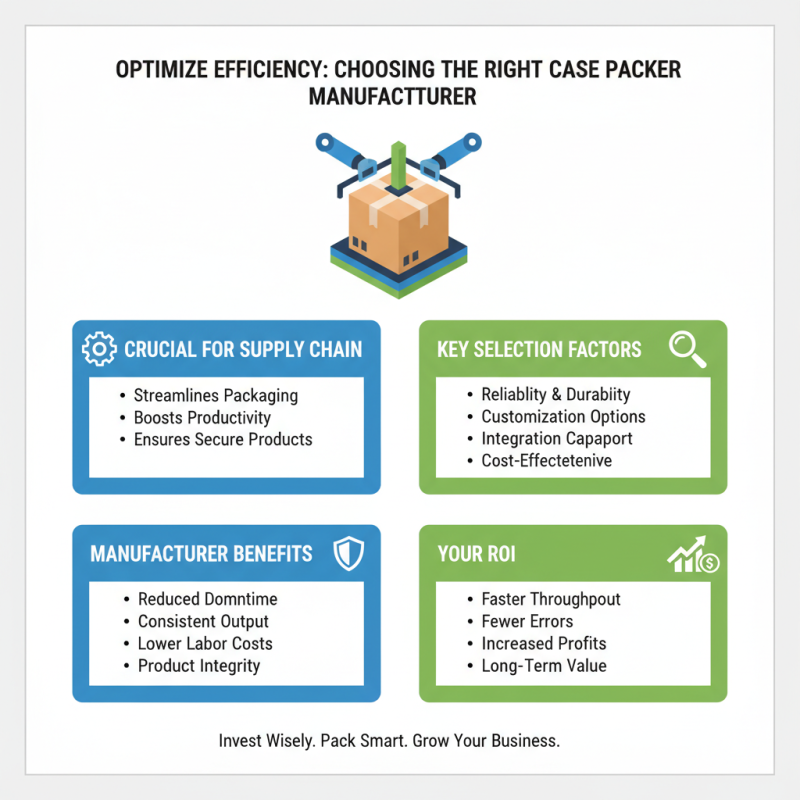
Choosing the right case packer manufacturer is crucial for efficiency. Case packers play a vital role in the supply chain. They streamline the packaging process, which directly impacts productivity. A reliable manufacturer ensures your products are packed securely and efficiently.
When evaluating manufacturers, consider their technology. Advanced machines can handle various packaging styles. Flexibility is essential. You may need to adapt to different product sizes or types. Look for manufacturers that prioritize innovation, as it can lead to long-term benefits. Pricing also matters, but the cheapest option might not offer the best quality.
Communication is often overlooked, yet it is key. A manufacturer that listens can provide tailored solutions. You might face challenges during implementation. Reflect on past experiences with suppliers. Did they understand your needs? Good communication can prevent misunderstandings and delays. Take the time to find a partner who aligns with your business goals.
Identifying Key Features and Specifications for Case Packers
When selecting case packer manufacturers, key features and specifications matter significantly. It's essential to consider the speed and efficiency of the systems. According to a recent industry report, businesses can boost packaging speed by up to 35% with advanced models. This can translate to thousands of additional units packed daily.
Flexibility is another important factor. Many modern case packers are designed to handle various packaging types and sizes. This adaptability allows businesses to respond to changing market demands swiftly. In fact, reports indicate that flexible systems reduce downtime significantly, enhancing productivity.
Assessing the ease of maintenance is crucial as well. Systems that require less frequent servicing can save money in the long run. Studies reveal that a well-maintained machine can operate up to 15% more efficiently. However, not all manufacturers provide clear guidelines for upkeep. Potential buyers should inquire about the manufacturer's support and resources available for maintenance.
Evaluating Manufacturer Reputation and Expertise in the Industry
When selecting a case packer manufacturer, reputation and expertise are crucial. Researching a company’s background can reveal valuable insights. Look for manufacturers with years of experience in the packaging industry. Statistics indicate that over 70% of companies prefer suppliers with a proven track record. This preference reflects the need for reliability in complex manufacturing processes.
Tips: Check online reviews and case studies. They can provide real-world insights into a manufacturer’s performance. Engaging with industry forums can also offer perspectives from peers. Sometimes, manufacturers may exaggerate capabilities. It's essential to decipher marketing jargon from actual expertise.
In addition to reputation, evaluate the technical capabilities. Does the manufacturer invest in innovative technologies? Reports show that companies with advanced equipment improve efficiency by 30%. This improvement can significantly impact production timelines. However, some manufacturers may lack the flexibility to adapt to changing needs. Be cautious of rigid processes that may not align with your business goals.
2026 How to Choose the Right Case Packer Manufacturers for Your Business?
| Manufacturer Location |
Industry Experience (Years) |
Number of Clients |
Customer Satisfaction Rating (out of 5) |
Certifications |
| North America |
15 |
150 |
4.8 |
ISO 9001, CE |
| European Union |
10 |
120 |
4.6 |
ISO 14001, UL |
| Asia Pacific |
20 |
200 |
4.9 |
ISO 50001, OHSAS 18001 |
| South America |
8 |
80 |
4.5 |
ISO 9001 |
| Middle East |
12 |
95 |
4.7 |
CE, HACCP |
Comparing Costs and Value Propositions of Different Manufacturers
When selecting case packer manufacturers, understanding costs is crucial. Different manufacturers offer various pricing structures. It's essential to examine what is included in the price. Some might have lower upfront costs but lack essential features. Others might be more expensive initially, but their machines offer better efficiency.
Value propositions can significantly vary. A manufacturer that prioritizes quality may have higher initial costs but can save money in the long run. Maintenance and parts availability are critical factors. A cheaper machine could lead to higher repair bills and downtime. Assessing long-term costs helps in decision-making.
Visiting a manufacturer's facility can provide insights into their operations. Ask for references and speak to existing customers. Their feedback on reliability and support can highlight value. Investing in the right case packer manufacturer is key to enhancing your production line. However, this requires careful consideration of both costs and overall value.
Assessing Customer Support and After-Sales Services Offered by Companies
When selecting case packer manufacturers, customer support and after-sales services are often overlooked. Yet, these aspects are critical for lasting partnerships. A recent industry report indicates that 72% of manufacturers cite inadequate support as a reason for switching suppliers. This highlights the necessity of assessing how well a company stands behind its product.
Support should extend beyond installation. Consider the availability of technical assistance and training programs. Many companies promise 24/7 support, but not all deliver. A survey found that only 45% of businesses can actually reach a qualified technician around the clock. This discrepancy can lead to costly downtime, emphasizing the importance of vetting this aspect thoroughly.
After-sales service is equally significant. Regular maintenance can prolong the life of equipment. Reports show that systems with proactive service plans can extend operational life by up to 30%. Understand the warranty terms clearly. Some manufacturers have vague policies, creating unexpected costs post-purchase. Each detail is crucial—it's worth spending time to ensure a smooth operating experience in the long run.