
Buying a Low Speed Electric Car can feel simple. It is not.
The name suggests an easy choice, yet battery size, charging access, road limits, weather, and passenger needs all matter. The International Energy Agency reported that global electric car sales exceeded 14 million in 2023. However, that figure mainly covers full-speed passenger cars, not every neighborhood vehicle. Buyers should therefore avoid copying mainstream EV advice blindly. A compact low-speed model may suit a gated community, campus, resort, or short urban commute. It may disappoint on steep roads or longer routes.
Sam Abuelsamid, Principal Analyst at Guidehouse Insights, has repeatedly stressed the importance of matching vehicle capability with real use. His practical advice is often summarized as: “Buy the vehicle that fits your mission.” That principle belongs at the center of these seven tips. Check the manufacturer’s tested range, but leave room for cold mornings, hills, passengers, and aging batteries. Read the warranty carefully. Ask who repairs the controller, motor, and charger after purchase.
The U.S. Department of Energy notes that driving style, temperature, and accessory use can affect electric-vehicle efficiency. That warning applies here too. A quoted 80-mile range may become much shorter with frequent stops and heavy loads. This is where many buyers, including experienced ones, make assumptions. I might choose the cheapest model, then regret its weak suspension or limited service network. The smartest decision is not always the lowest price. It is the vehicle that performs reliably on your actual route, every week.
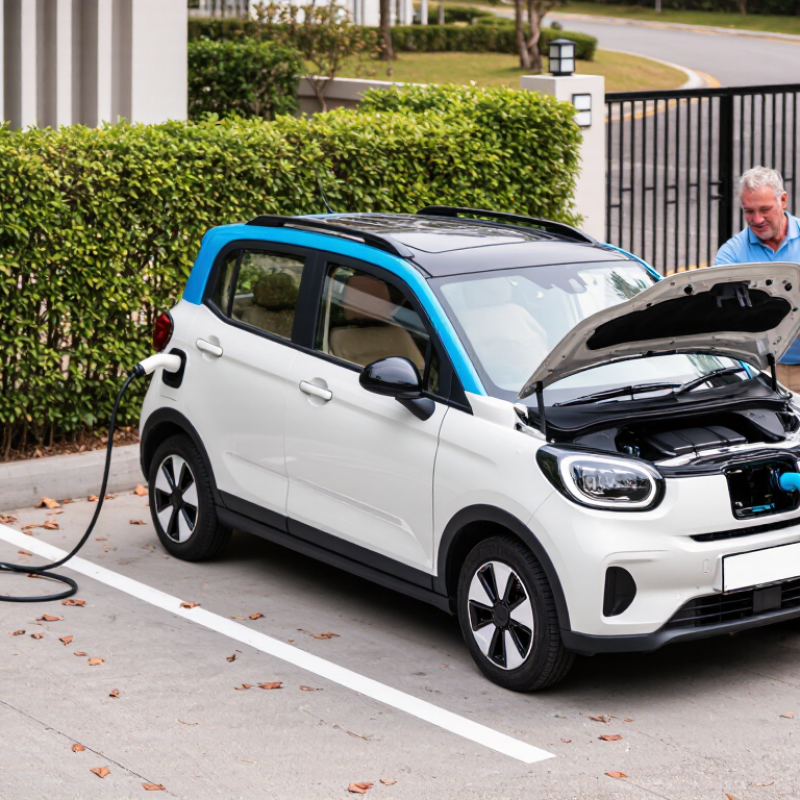
Before comparing low-speed electric cars, define the work they must perform. Track your real trips for one week: distance, road grade, passengers, cargo, and charging locations. The AAA Foundation’s 2023 American Driving Survey reported that the average U.S. driver traveled about 31.5 miles per day. That figure helps, but averages can mislead. A 20-mile commute with steep hills may demand more energy than a flat 35-mile errand day.
Check the vehicle’s speed, range, and permitted road use against your local requirements. The U.S. National Highway Traffic Safety Administration defines a low-speed vehicle as one capable of at least 20 mph but not exceeding 25 mph. It also requires specific safety equipment under Federal Motor Vehicle Safety Standard 500. Confirm local rules before purchase. Your route may include roads where a low-speed vehicle is unsuitable or restricted. Measure your driveway, garage, turning space, and outlet distance. Small details matter.
Weather changes the calculation. Cold temperatures, strong wind, hills, and repeated stops can reduce practical range. The U.S. Department of Energy’s Alternative Fuels Data Center recommends comparing usable range with daily driving needs and charging access. Leave a buffer, not just the advertised maximum. I would also test the car with actual passengers and groceries. That test may expose weak acceleration or uncomfortable seating. My own mistake would be trusting a brochure more than a weekday routine. Reliability begins with honest measurements.

Speed limits should guide your purchase, not just the advertised maximum. A car designed for 25 mph may be restricted to residential roads, private communities, or approved local routes. Check your city and state transport websites before paying a deposit. Rules can differ between neighboring areas. A vehicle legal on one street may be unsuitable on another.
Ask the seller for written safety information, including braking performance, lighting, seat belts, mirrors, and crash protection. Look for certification from recognized testing authorities in your region. Do not rely only on phrases such as “road ready.” Check whether registration, a driving license, insurance, or a special permit is required. Also confirm whether passengers, night driving, and wet-weather use have separate restrictions. These details feel boring until a roadside inspection becomes expensive.
I once assumed a lower speed meant fewer safety concerns. That was too simple. Slow vehicles still share space with trucks, bicycles, and pedestrians. During a test drive, examine visibility at junctions and the distance needed for a full stop. Test the lights in shade and direct sunlight. Ask how battery range changes in cold weather, with passengers, or on hills. Seller estimates may be optimistic. Leave room for doubt, and verify each important claim with official guidance and independent inspection results.
Tip 1: Compare battery chemistry, not just capacity.
Lithium iron phosphate batteries usually offer strong cycle life and better thermal stability. Nickel-based batteries can provide higher energy density, but may cost more. The International Energy Agency reported that LFP batteries represented about 40% of global electric-car battery demand in 2023. Battery age still matters more than the label.
Tip 2: Treat driving range as a test result, not a promise.
The U.S. Department of Energy warns that speed, cold weather, hills, and cabin heating can reduce electric range. AAA testing found that freezing conditions reduced range by about 41% in some vehicles. Low-speed cars may travel 40 to 80 miles per charge, but real figures vary widely. I would test the car on my actual route, including a hill and a cold morning. My earlier mistake was trusting a dashboard estimate too easily.
Tip 3: Match charging hardware to your daily routine.
A standard household outlet is convenient, but slow. A 240-volt Level 2 charger can often add roughly 10 to 30 miles of range per hour, according to the U.S. Department of Energy’s Alternative Fuels Data Center. Public charging availability is improving; the IEA counted more than four million public charging points worldwide at the end of 2023. Check connector compatibility, installation cost, charging time, and winter performance before buying. A larger battery is not always better if overnight charging is unreliable.
Motor performance should match your daily route, not your imagination. The U.S. Department of Energy reports that electric drive systems can convert more than 90% of input energy into movement. Ask for continuous power, hill-climbing ability, and battery performance under load. A quick test on a slope is valuable. Watch the speed drop. That detail matters.
Comfort is practical engineering. Sit for ten minutes, then check knee angle, steering reach, seat support, and suspension response. The International Energy Agency’s Global EV Outlook 2024 reports that electric car sales exceeded 17 million worldwide in 2024, but low-speed vehicles serve different journeys. Do not copy full-size car expectations. Storage also needs a physical test: place two grocery bags, a charging cable, and a small tool kit inside. Measure the opening, not only the advertised volume. The U.S. Department of Energy’s Alternative Fuels Data Center recommends comparing charging equipment, electrical requirements, and operating conditions before purchase. Confirm charging time in real temperatures. Published figures can feel optimistic. Essential features include reliable lights, mirrors, seat belts, parking brakes, battery protection, and a clear energy display. I would also inspect fastener quality and door alignment. Small flaws often reveal rushed assembly. A quiet motor is pleasant, but dependable brakes and predictable steering deserve more attention.
Buying a low-speed electric car requires more than comparing sticker prices. Build a five-year worksheet first. Include purchase cost, financing, registration, insurance, home charging, electricity, tires, and resale value. AAA’s 2024 Your Driving Costs report puts average annual ownership and operating costs at $12,297 for a new vehicle. That figure covers conventional highway vehicles, so use it only as a broad benchmark. For a low-speed model, request real energy-use figures and multiply them by your local electricity tariff.
Warranty language deserves a slow reading. Ask whether coverage includes the battery pack, charger, controller, display, and labor. Record the duration, mileage limit, transfer rules, and battery-capacity threshold. Some policies cover failure but not gradual capacity loss. That distinction can change the repair bill. The IEA’s Global EV Outlook 2024 reports that average battery-pack prices fell 14% in 2023, reaching $139 per kilowatt-hour. Prices may continue falling, but a replacement quote today can still exceed the vehicle’s value.
Maintenance is usually simpler, not free. Consumer Reports estimated that EV owners spend about half as much on maintenance as gasoline-car owners over a vehicle’s life. Check brake fluid, tires, suspension, cooling systems, and battery diagnostics. Request service intervals and parts prices before signing. Keep a reserve for a charger or battery module. I would also budget for errors in my spreadsheet; weather, tire wear, and electricity rates rarely behave perfectly.