Top 10 Types of Mother Roll Reel for Global Buyers?
Global buyers are evaluating Mother Roll Reel products more carefully as paper, film, foil, and nonwoven markets expand. FAO statistics indicate that global paper and paperboard production exceeded 400 million tonnes in 2022. Smithers’ The Future of Global Packaging to 2028 also identifies paper-based packaging as a major growth area. These figures show strong demand. They do not guarantee easy purchasing decisions.
A Mother Roll Reel is more than a large wound roll. Its width, core diameter, basis weight, moisture level, winding hardness, splice quality, and surface finish affect converting performance. TAPPI technical guidance repeatedly emphasizes process control, while ISO 12625 standards support consistent testing for tissue and paper products. Dr. Martin A. Hubbe, a recognized paper-science expert, has cautioned, “Recycling is not infinite; fiber quality declines with repeated use.” That reminder matters when buyers compare recycled and virgin-fiber reels.
The following ranking examines ten practical types for international procurement. It considers end use, material structure, machine compatibility, storage conditions, and shipment risk. Kraft paper reels suit sacks and wrapping. Tissue reels require soft, uniform winding. Coated, laminated, foil, film, and thermal reels demand tighter surface control. Jumbo reels may reduce unit costs, but they can increase handling damage and warehouse pressure. A lower price is not always lower cost.
The market is not perfectly standardized. Some specifications remain unclear. Buyers should verify technical data sheets, inspection records, certificates, packing photos, and trial results before signing contracts. Even experienced purchasers can miss moisture migration or edge damage. This guide aims to make those risks visible and support more reliable global sourcing decisions.
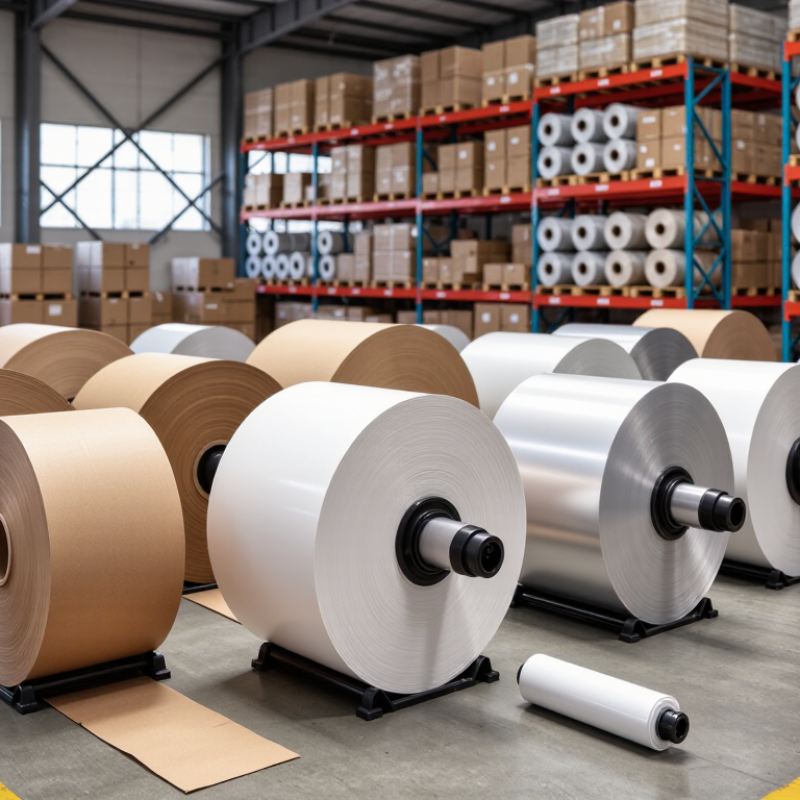
Mother Roll Reel Basics and Its Role in Industrial Web Processing
Mother roll reels are large, continuous webs supplied for slitting, coating, laminating, printing, or rewinding. Common types include kraft paper, coated paper, tissue, thermal paper, release liner, plastic film, aluminium foil, nonwoven, laminated web, and barrier paper. Each type behaves differently under tension. A paper reel may stretch unevenly, while film can wrinkle beside a chilled roller. FAOSTAT forestry data places global paper and paperboard production above 400 million tonnes annually in recent years. This scale explains why reliable reel control matters across industrial web processing.
A mother reel’s core diameter, width, basis weight, moisture, winding hardness, and splice quality affect machine performance. Poor edge alignment can create telescoping during high-speed unwinding. Excessive tension may cause web breaks or permanent deformation. Smithers’ 2024 flexible packaging research highlights downgauging, recyclability, and automation as major converting priorities. These trends demand tighter control, not merely larger reels. A specification can look perfect on paper and still fail during production. Humidity is often underestimated.
Tips: Confirm reel hardness across the full width, not only at the edges. Check core strength before transport. Record moisture and temperature during storage. Run a controlled trial at reduced speed first. Review defects after slitting, because some winding problems appear late. Where possible, request test data for tensile strength, coefficient of friction, and caliper variation. Industry practice improves through measurement, but operators should still question neat-looking results.
Top Types Classified by Material, Structure, and Production Purpose
Top 10 Types of Mother Roll Reel for Global Buyers?
Mother rolls differ by material, structure, and production purpose. Paper mother rolls remain important for bags, tissue, labels, and cartons. FAO reported global paper and paperboard production above 400 million tonnes in 2022. That volume explains their continued industrial relevance.
Film mother rolls use materials such as PE, PP, PET, or PVC. They support moisture barriers, printing, and heat sealing. Foil rolls offer stronger light and oxygen protection. Nonwoven rolls serve hygiene, medical, filtration, and technical applications. Material choice affects stiffness, recyclability, sealing temperature, and storage behavior.
Structure creates another practical division.
Single-layer rolls are easier to process and inspect. Coated rolls add ink, adhesive, barrier, or release performance. Laminated rolls combine paper, film, foil, or nonwoven layers. Printed mother rolls carry repeated graphics before slitting. Jumbo rolls improve production efficiency, but they demand accurate tension control.
According to Smithers’ 2024 flexible packaging outlook, the market is expected to grow by roughly 4% annually toward 2029. More converting capacity will increase demand for stable, high-width rolls.
Production purpose separates the remaining types.
Slitting rolls support narrower reels for converters. Printing rolls prioritize surface smoothness and winding consistency. Packaging rolls focus on sealing and barrier properties. Hygiene rolls require cleanliness and reliable unwinding. Industrial rolls may need abrasion or thermal resistance.
Buyers should check core diameter, roll width, winding direction, gauge variation, and maximum roll weight. A perfect classification is impossible. Real production lines often use hybrid rolls, and specifications sometimes conflict. That needs careful trial testing.
Key Specifications for Comparing Mother Roll Reels Across Suppliers
Top 10 Types of Mother Roll Reel for Global Buyers
Mother roll reels include paper, BOPP film, PET film, PE film, aluminum foil, metallized film, laminated film, labelstock, release liner, and coated nonwoven reels. Each type needs different comparison points. Smithers’ 2024 flexible packaging outlook values the global market at more than USD 300 billion, increasing supplier pressure and specification risks.
Compare reel width, outer diameter, core size, winding direction, roll weight, and tolerance. For films, also check thickness variation, haze, tensile strength, coefficient of friction, and seal performance. For paper reels, moisture content and caliper are critical. A 1% moisture difference can affect curl, tension, and printing stability. Aluminum foil requires pinhole limits and surface cleanliness. Laminated reels need bond strength and layer identification. Ask suppliers for test methods, not only target values. ISO and TAPPI procedures can support more reliable comparisons.
Tips: Request a retained sample and a full inspection report. Check whether measurements use the same temperature and humidity. A neat spreadsheet still misses reality. In production trials, edge damage and telescoping often appear after long-distance shipping. Smithers also reports continued growth in flexible packaging demand, but sustainability claims remain difficult to compare. Recycled content, downgauging, and recyclability should be verified through documented technical data. Do not accept “custom quality” as a specification. It sounds reassuring, but it is incomplete.
Selection Factors for Buyers Evaluating Quality, Capacity, and Cost
Top 10 Types of Mother Roll Reel for Global Buyers?
A mother roll reel is the large parent roll used for slitting, coating, printing, or converting. Common types include paper, film, foil, tissue, nonwoven, thermal, adhesive, labelstock, laminated, and coated reels. Each type demands different inspection points. Paper needs stable moisture and smooth edges. Film requires consistent thickness and winding tension. Foil needs careful handling because small dents can create serious production waste.
Buyers should evaluate quality, capacity, and cost together. Check caliper, tensile strength, surface treatment, core size, and roll hardness. A reel may look excellent but unwind poorly on a fast machine. Confirm maximum diameter, width tolerance, loading method, and storage limits before ordering. Capacity is not only roll weight. It also depends on usable material, machine compatibility, and transport restrictions. Cost should include slitting loss, packaging, freight, customs, storage, and rejected material. A cheaper reel can become expensive after one unstable production run.
Tips: Request a technical data sheet and a trial reel. Measure thickness across several points, not only the center. Inspect the outer layers for wrinkles, telescoping, or crushed edges. Ask for batch records and test results when consistency matters. Do not rely on attractive pricing alone. I have seen evaluations focus too heavily on weight, while winding quality was ignored. That mistake is easy to repeat. Small pilot tests often reveal problems earlier than large purchases.