What is UVLED Flatbed Printing and How Does It Work?
UVLED Flatbed Printing is revolutionizing the printing industry. This innovative technology combines UV printing with LED curing, resulting in high-quality outputs. Unlike traditional methods, UVLED offers versatility on various substrates. It works by using ultraviolet light to cure ink as it is printed, allowing for rapid production.
The appeal of UVLED Flatbed Printing lies in its ability to print on materials like wood, metal, and glass. This flexibility opens up numerous possibilities for creative designs. However, it is essential to understand its complexities. Operators must optimize settings for different materials. Misalignment can lead to wasted materials and time.
While UVLED Flatbed Printing boasts speed and efficiency, challenges remain. Maintenance is crucial for consistent results. Users often face a learning curve, especially when switching from conventional printing. Embracing this technology requires careful consideration and adaptability. The potential benefits are significant, but so are the learning opportunities.
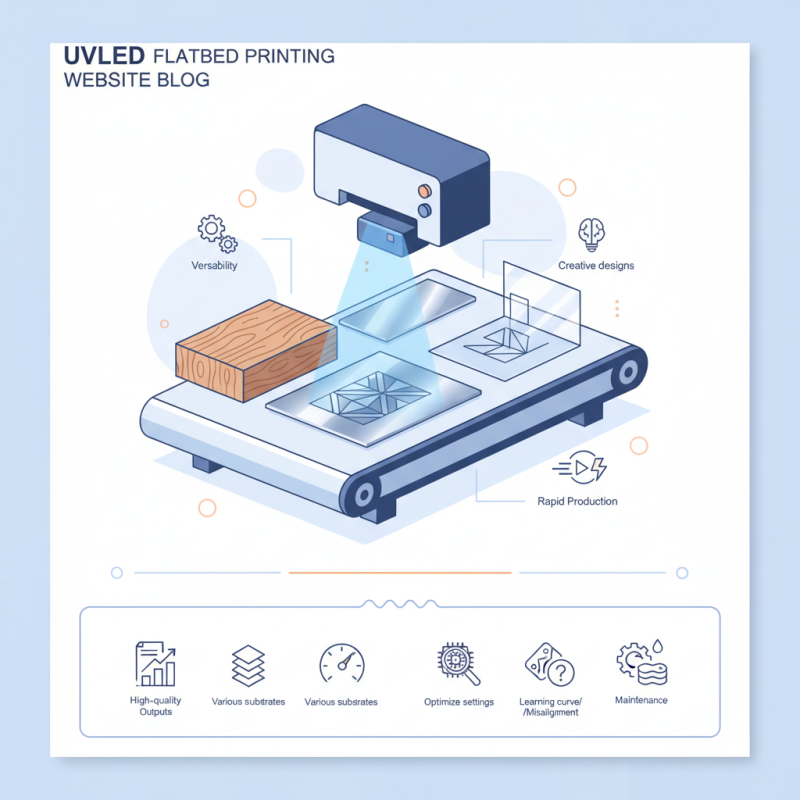
Overview of UVLED Flatbed Printing Technology
UVLED flatbed printing is revolutionizing the printing industry. This innovative technology uses ultraviolet light to cure inks as they are printed. Unlike traditional printing methods, UVLED can print on various surfaces, from wood to metal and plastic. It does not require long drying times, making it efficient for high-volume jobs. According to industry reports, the global UV printing market is expected to grow significantly, reaching over $9 billion by 2026.
One key advantage of UVLED printing is its precision. It delivers vibrant colors and sharp details on different materials. This versatility appeals to businesses looking to create unique products. However, there is a learning curve. Proper calibration and ink selection can be challenging. Mistakes in settings can lead to poor adhesion or fading colors over time.
**Tip:** Regularly maintain your UVLED printer. This prevents clogging and ensures consistent quality. Testing different surface types can help identify the right settings for optimal results. Investing in training for your team can also enhance their skills and reduce costly errors in the long run.
UVLED Flatbed Printing Technology Overview
This chart illustrates key metrics of UVLED Flatbed Printing technology, including printing speed, resolution, energy consumption, and material versatility. These metrics highlight the efficiency and capabilities of this innovative printing method.
Key Components of UVLED Flatbed Printers
UVLED flatbed printers offer innovative solutions for diverse printing needs. The key components of these printers significantly influence their functionality and efficiency. A critical element is the UVLED light source, which provides instant curing of inks. This feature allows for high-quality prints on various substrates, including wood, glass, and metal. Data reports suggest that the market for UVLED printing technology is growing at a CAGR of 15.6%, illustrating its increasing adoption across industries.
Another important component is the ink system. UVLED flatbed printers utilize specialized inks that are sensitive to UV light. These inks not only ensure vivid colors but also enhance durability. However, compatibility issues between inks and substrates can arise. Printer operators must conduct thorough tests to achieve optimal results. According to industry analysis, approximately 30% of printing mishaps occur due to ink and substrate mismatch.
The flatbed design itself is a noteworthy feature. It accommodates various material sizes, providing flexibility. Users can directly print on large items without the need for pre-treatment. Yet, this benefit comes with challenges. Maintaining precision over large surfaces can be tricky. Constant calibration is essential to avoid misalignments. Users must be vigilant about machine maintenance to ensure consistent output quality.
Principles of UVLED Curing Process
The UVLED curing process is a fascinating technology. It uses ultraviolet light to dry and harden inks or coatings applied on various materials. The key principle behind this process is polymerization. When exposed to UV light, certain chemicals in the inks react and transform into solid forms almost instantly. This rapid hardening allows for vivid colors and sharp details.
The complexity of the UVLED process can be a double-edged sword. While it offers quick drying times, ensuring proper curing requires precise calibration. Incorrect settings can lead to incomplete curing. This can cause issues like smudging or fading. The interaction between ink and substrate must also be considered. Some materials may not react well with UV inks, which could lead to adhesion problems. Even experienced operators must pay close attention.
Another aspect to note is energy consumption. Although UVLED systems are often praised for being energy-efficient, the initial energy used can spike during operation. Companies must evaluate whether the benefits outweigh the costs. Continuous monitoring and adjustment of parameters are necessary. This technology holds promise but requires thoughtful implementation and constant improvement.
Applications of UVLED Flatbed Printing Across Industries
UVLED flatbed printing is revolutionizing various industries with its versatility and efficiency. This technology allows printing on a wide range of materials, including wood, glass, and metal. Its applications are extensive, from signage and packaging to custom home décor. The ability to print directly on surfaces saves time and reduces waste, but it can pose challenges with certain textures and finishes.
In the signage industry, UVLED printing excels at producing vibrant, durable graphics. The colors remain bright, even in outdoor settings. For packaging, it enables complex designs and quick turnarounds. However, some materials may require pre-treatment for optimal adhesion. Additionally, custom applications in interior design highlight its potential. Furniture pieces can be transformed with unique designs, but ensuring consistency across large orders is critical.
In promotional products, this printing method opens new doors. It enhances personal items like phone cases and gifts. Yet, achieving the perfect finish sometimes requires multiple tests. Companies must be prepared for adjustments. As industries adopt this technology, understanding its limitations can lead to improved outcomes. Each application holds promise and potential pitfalls, inviting continuous learning and refinement.
What is UVLED Flatbed Printing and How Does It Work? - Applications of UVLED Flatbed Printing Across Industries
| Industry | Application | Materials Used | Benefits |
| Signage | Custom signs and displays | Acrylic, PVC, Wood | High durability, vivid colors |
| Packaging | Product packaging printing | Cardboard, Plastic | Quick turnaround, eco-friendly inks |
| Textiles | Custom fabric designs | Cotton, Polyester | Soft hand feel, detailed prints |
| Decorative Items | Personalized gifts | Ceramics, Glass | Unique designs, high definition |
| Automotive | Interior and exterior parts | Plastic, Metal | Long-lasting, resistant to wear |
Advantages of Using UVLED Flatbed Printing Technology
UVLED flatbed printing is increasingly popular due to its unique advantages. This technology utilizes ultraviolet (UV) light to cure or dry ink as it is printed. The result is a vibrant and durable image on various surfaces. Unlike traditional printing methods, UVLED printing provides immediate results. This speeds up production and reduces waiting time.
One major advantage is versatility. UVLED flatbed printers can print on materials like metal, wood, acrylic, and glass. This opens up creative possibilities for businesses. The ink adheres well to different surfaces, ensuring high-quality results. Another benefit is environmentally friendly inks. UV-curable inks emit minimal VOCs, making them safer for indoor use.
However, there are challenges. Some users find ink costs higher than conventional options. The technology can also be complex to operate. Proper training is often required to achieve the best results. Additionally, periodic maintenance is crucial to maintain print quality. Users must be prepared to face these obstacles for successful implementation.