
Global shipping depends on labels that remain readable from warehouse shelves to distant delivery points. Direct Thermal Roll Labels offer a practical option for many logistics operations. They print without ink ribbons, reducing equipment complexity and routine supply costs. The process is fast. The workflow stays clean.
In busy fulfillment centers, these labels can support packing stations handling hundreds of parcels each hour. Clear barcodes help scanners capture shipment data quickly. Roll formats also fit common desktop and industrial printers. This flexibility matters when businesses manage different carton sizes, carriers, and shipping routes. Reliable adhesive selection remains essential. Corrugated boxes, plastic mailers, and recycled packaging can require different label constructions.
Direct thermal media performs well for short-term shipping identification. However, it is not perfect. Prolonged sunlight, heat, or friction may darken the surface. Humid international routes can create additional risks. Experienced teams should test labels inside real packaging conditions before large-scale deployment. A sample parcel may reveal problems that a laboratory test misses.
Choosing the right material requires more than comparing prices. Businesses should examine barcode contrast, roll winding, adhesive strength, printer compatibility, and storage conditions. Carrier requirements should also be reviewed regularly. Standards and equipment change over time. A dependable supplier can provide technical specifications, test samples, and consistent batch quality. These details build confidence across international shipping networks. Direct Thermal Roll Labels can improve speed and simplify operations, but careful evaluation makes the investment more reliable.
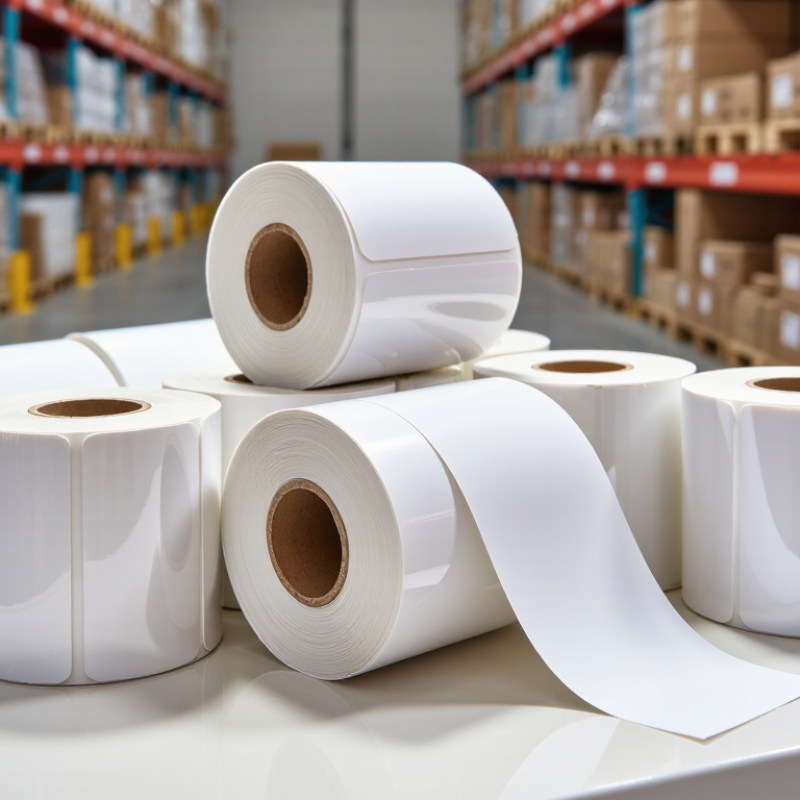
Direct thermal roll labels suit global shipping because they print without ink or ribbons. Pitney Bowes’ 2023 Parcel Shipping Index recorded 161.8 billion parcels worldwide in 2022. That volume makes fast, simple label production valuable. The printer heats treated label stock, creating sharp black marks at the point of dispatch. However, heat, sunlight, and abrasion can fade the image. That weakness deserves attention.
Resolution changes the level of detail. A 203 dpi printer usually handles standard carton labels, large barcodes, and readable addresses. It is practical for busy packing stations. A 300 dpi option produces cleaner small text, compact barcodes, and detailed handling symbols. It can help when label space is limited. A 600 dpi printer supports very small text and dense two-dimensional codes, but it may increase equipment cost and reduce printing speed. More resolution is not automatically better.
Barcode quality still depends on contrast, quiet zones, sizing, and verification. ISO/IEC 15416 evaluates printed linear barcodes, while GS1 specifications define important symbol requirements. In real shipping trials, test the exact label material, scanner distance, and storage conditions. A perfect print can fail after moisture exposure. The overlooked detail is often the stock, not the dpi.

For global shipping, direct thermal roll labels offer a clean path from the packing bench to distribution centers. They print without ink ribbons, reducing consumables, setup time, and smudged transfer marks. A correctly printed GS1-128 barcode can carry shipment data in a compact, machine-readable format. Its application identifiers tell systems whether digits represent a serial number, lot, date, or other field. This structure matters when cartons cross multiple scanning environments.
SSCC-18 identifies the logistics unit, such as one pallet or carton. In practice, the number is commonly encoded within a GS1-128 symbol using application identifier 00. The label should sit flat, remain visible, and allow quiet zones around the bars. ISO/IEC 15416 provides a method for grading linear barcode print quality. Verifiers examine contrast, edge definition, defects, and decodability. A label that looks sharp to me may still fail a verifier. That is an inconvenient lesson.
Direct thermal stock performs well for short or controlled shipping cycles. Heat, sunlight, abrasion, and long storage can darken or fade the image. Choosing durable stock is not optional for every route. I would test labels after cold storage, handling, and repeated scans. Small mistakes appear quickly. Confirm dimensions, darkness, placement, and data before a full production run. Standards guide the format, but reliable execution depends on the printer, material, verification process, and staff checks.
| Data Dimension | GS1-128 | SSCC-18 | ISO/IEC 15416 | Direct Thermal Label Implication |
|---|---|---|---|---|
| Primary Function | A linear barcode symbology based on Code 128 for encoding GS1 identification and attribute data. | A unique 18-digit Serial Shipping Container Code used to identify a logistics unit such as a pallet, case, or parcel. | An international method for measuring the print and optical quality of certain linear barcodes. | Supports fast, on-demand printing of shipment identifiers without requiring ink or ribbon. |
| Standard or Identifier Type | Barcode application standard and data syntax. | GS1 identification key for a logistics unit. | Barcode quality-verification standard, not an identifier or barcode symbology. | The label material and print process should produce consistent symbol contrast and edge definition. |
| Typical Application Identifier | Uses GS1 Application Identifiers, such as (00), (01), (10), (15), and (17), depending on the data required. | Uses Application Identifier (00) to indicate an SSCC. | Does not define Application Identifiers; it evaluates the quality of the printed symbol. | Variable shipping data can be printed at the packing or dispatch point. |
| SSCC Data Structure | When encoding an SSCC, the data consists of AI (00) followed by the 18-digit SSCC. | Extension digit: 1 digit; GS1 company prefix: variable length; serial reference: variable length; check digit: 1 digit. | Not applicable to identifier structure. | The printer and software should preserve every digit and the check digit exactly as generated. |
| Human-Readable Interpretation | Application Identifiers are normally shown in parentheses in the human-readable text; the parentheses are not encoded in the symbol. | The 18-digit SSCC is normally printed below or near the barcode for manual verification. | Quality grades are reported separately from the human-readable data. | High-contrast black text on a light label face improves visual checking and scanning. |
| Quiet Zones | Requires clear blank areas at both ends of the symbol; GS1 specifications commonly express the minimum as 10 times the X-dimension. | Uses the quiet-zone requirements of the GS1-128 symbol that carries the SSCC. | Quiet-zone adequacy is one of the factors that can affect barcode quality evaluation. | Roll-label artwork should not place borders, text, perforations, or graphics inside the required blank areas. |
| Barcode Orientation | Often printed in a horizontal “ladder” orientation on logistics labels, subject to application and scanning requirements. | The SSCC may be represented in a GS1-128 symbol positioned for reliable scanning during handling and conveyor movement. | Evaluates the symbol as printed; it does not prescribe one universal label orientation. | Direct thermal roll stock allows flexible label length and placement for different package surfaces. |
| Quality Measurement | The printed symbol should be verified for data accuracy, dimensions, contrast, quiet zones, and scan performance. | The encoded SSCC must decode correctly and pass the applicable logistics-label quality requirements. | Uses parameters including decode, symbol contrast, minimum reflectance, edge contrast, modulation, defects, and decodability. | Print-head condition, darkness, speed, label coating, and storage conditions can affect the measured grade. |
| Quality Grade Scale | Quality is commonly expressed using the ISO/IEC 15416 grading system when verification is performed. | A logistics-unit label should meet the quality level required by the receiving and scanning environment. | Grades are commonly reported from 4.0 to 0.0, corresponding to A through F in the traditional reporting format. | A verifier should be used during setup and periodically in production when scan reliability is critical. |
| Direct Thermal Printing Method | Prints the barcode by applying heat directly to a heat-sensitive label surface. | Enables rapid, variable printing of a new SSCC for each logistics unit. | The printed result can be assessed against ISO/IEC 15416 after production. | No ink or ribbon is required, reducing consumables and simplifying printer operation. |
| Operational Advantages | Supports encoded shipment, product, batch, date, and logistics information within one standardized linear symbol. | Provides a globally unique reference for tracking a specific logistics unit through shipping and receiving events. | Creates an objective framework for checking whether a printed barcode is likely to scan reliably. | Fast output, low setup complexity, and easy integration with warehouse or shipping workflows. |
| Environmental Limitations | The barcode remains dependent on adequate contrast, accurate dimensions, clean edges, and an undamaged label. | A damaged, obscured, duplicated, or incorrectly generated SSCC can interrupt logistics-unit identification. | Quality scores can be reduced by low contrast, print defects, surface damage, glare, or poor scanning conditions. | Direct thermal images may be affected by prolonged heat, ultraviolet exposure, abrasion, moisture, oils, or chemicals; material selection should match transit conditions. |
| Best-Practice Control | Use validated data formatting, correct Application Identifiers, sufficient quiet zones, and a symbol verifier. | Generate each SSCC only once, validate its check digit, and associate it with the correct logistics unit and shipment record. | Verify representative labels at the intended scanning distance and under realistic lighting and handling conditions. | Calibrate print darkness and speed, clean the thermal print head, store rolls properly, and test labels before global deployment. |
Note: Exact label dimensions, X-dimension, quality grade targets, and durability requirements depend on the applicable GS1 specification, scanner environment, logistics partner requirements, and expected transport conditions.
Why Choose Direct Thermal Roll Labels for Global Shipping?
Global shipping creates a constant demand for readable, quickly produced labels. The Pitney Bowes Parcel Shipping Index 2024 recorded 161.8 billion parcels worldwide in 2023. At this scale, removing thermal-transfer ribbons can simplify daily operations. Direct thermal printers create images through heat-sensitive label material. No ribbon. Less handling. Fewer consumables also mean fewer replacements, storage tasks, and disposal steps at packing stations. Operators can load a roll and continue printing, which helps reduce interruptions during busy export periods.
The benefit is practical, but not universal. Direct thermal labels usually suit shipping cartons, routing labels, receipts, and other short-life applications. They can fade under prolonged sunlight, high heat, or harsh chemical exposure. The International Safe Transit Association stresses that packaging labels must remain legible through handling and distribution conditions. Therefore, testing matters before standardizing one label type across every destination. A sample roll should face moisture, temperature changes, abrasion, and scanning tests. Small failures become expensive when parcels cross several hubs.
From operational experience, ribbon-free printing also makes stock control easier. Teams manage fewer part numbers and reduce the risk of selecting an incorrect ribbon width. Still, consumable savings should not be overstated. Direct thermal material can cost more per label, and its coating requires suitable storage. That trade-off deserves review. Pitney Bowes’ parcel data shows the scale of modern delivery networks, but each warehouse has different equipment, climate, and label-life requirements. A measured trial remains more reliable than a blanket assumption.
Direct thermal roll labels simplify shipping because they print without ribbons or liquid ink. Their real challenge appears after printing. Heat, sunlight, moisture, and long storage can change their performance.
In transit testing, place labeled cartons in warm and humid conditions, then inspect them weekly. A dark vehicle interior can exceed 50°C, while coastal air may soften exposed adhesive. Strong light can fade thermal images. Moisture may curl label edges or weaken adhesion. Test barcode scans after abrasion, condensation, and repeated handling. Store unused rolls for six to twelve months in sealed packaging, away from heat and direct light. Compare stored samples with fresh ones. Small differences matter.
Tips: Keep rolls flat, dry, and tightly wrapped. Use clean, smooth carton surfaces. Leave time for labels to reach room temperature before printing. Test the actual label, printer settings, and packaging together.
Field experience often reveals an uncomfortable truth: a label that looks clear on day one may fail months later. Some tests also overstate real-world durability because they use ideal surfaces. Recheck results with cold cartons, dusty hands, and rushed packing. Direct thermal labels can perform reliably for global shipping, but only when transit conditions and storage time match the test plan.
Direct thermal roll labels suit global shipping because they print without ink, ribbons, or drying time. The 4 × 6-inch format gives shipping barcodes enough space for scanning, routing details, and handling instructions. It also fits common parcel workflows, reducing manual adjustments between packing stations. The 2023 Global Parcel Shipping Index reported 161.8 billion parcels worldwide in 2022, showing why repeatable label formats matter.
Speed matters on busy lines. A direct thermal printer can produce labels immediately after order verification. Roll stock also supports continuous loading, fewer interruptions, and cleaner work surfaces. At 203 dpi, many standard shipping barcodes remain readable when designed with proper contrast and quiet zones. ISO/IEC 15416 testing can help verify print quality before large-volume deployment.
The format is not perfect. A 4 × 6-inch label may waste space on small parcels, especially when packaging changes frequently. Direct thermal material can also darken under heat or prolonged sunlight. In practical workflow tests, teams should check adhesive performance, scanner distance, label orientation, and reprint rates. Small errors become expensive at scale. A short pilot using real cartons often reveals problems that specifications miss.
A 4 × 6-inch label is widely used for parcel shipping because it accommodates common address, barcode, and routing information in a compact format. The chart shows the theoretical label output for a 6-inch-long label at different print speeds.
Calculation: labels per minute = printer speed in inches per second × 60 ÷ 6 inches. Actual workflow throughput may be lower because of label dispensing, scanning, packing, and operator handling.