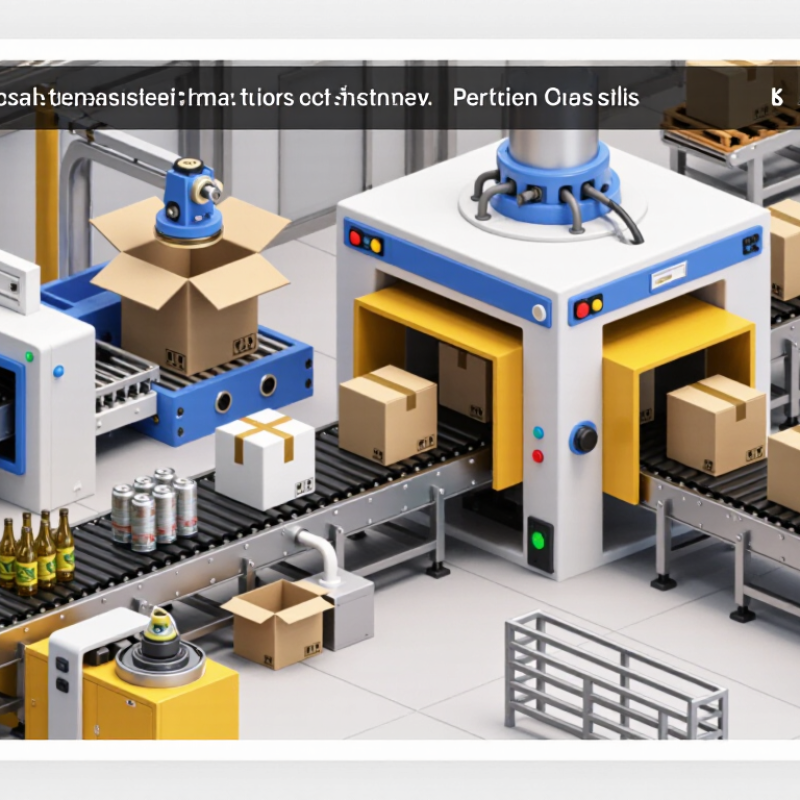
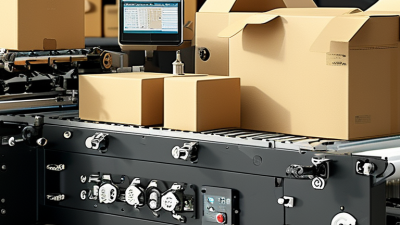
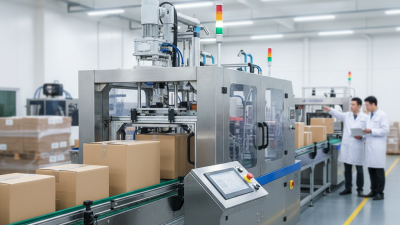
A carton packer is more than a machine that closes boxes. It coordinates product infeed, carton forming, loading, closing, and discharge. Inside a modern packaging line, sensors watch spacing, servo motors control movement, and reject systems remove damaged packs. The result is a repeatable process with fewer manual touches.
The Packaging Machinery Manufacturers Institute (PMMI) reported that U.S. packaging machinery shipments reached approximately $10.2 billion in 2022. Its industry research also identifies automation, labor shortages, and flexible production as major investment drivers. These figures cover packaging machinery broadly, not carton packers alone. That distinction matters. It prevents inflated claims about one equipment category.
Jorge Izquierdo, Vice President of Market Development at PMMI, has stated, “Automation helps processors improve efficiency, consistency, and flexibility.” His observation explains the growing interest in carton packing systems. A carton packer can place bottles, pouches, cans, or trays into cases at controlled speeds. It can also change formats when the correct tooling and software are available.
A typical cycle begins with product separation. Blank cartons or cases are erected nearby. A pick-and-place arm, robotic system, or mechanical loader positions the products. Adhesive or tape then seals the package. Sensors check presence and alignment before the carton leaves the machine.
Small details matter. A poorly adjusted guide can crush a carton. A weak adhesive bond can create downstream failures. Operators still need practical experience.
This article explains what a carton packer does, how each stage works, and where performance claims require closer examination. Efficiency is valuable, but reliability, changeover time, maintenance access, and product protection deserve equal attention.
A carton packer loads filled products into shipping cases, cartons, or trays. It replaces repetitive hand packing with controlled, repeatable movements. Products may arrive in rows, while the machine forms a case, groups items, and closes the package. Common formats include intermittent-motion, continuous-motion, robotic, and wraparound systems.
Speed depends on product shape, carton size, and loading pattern. Some carton packers handle up to 60 cases per minute, although real production rates can be lower. A fragile bottle, uneven pouch, or unstable stack needs gentler handling. The machine may use vacuum heads, side belts, servo axes, or robotic grippers. Small details matter. Poor carton quality can cause jams.
Industry investment supports this shift. PMMI’s 2024 State of the Industry report valued U.S. packaging machinery shipments at about $10.2 billion in 2023. The report also identifies labor availability and automation as continuing operational concerns. A carton packer can reduce repetitive manual work, but it does not remove every problem. Operators still adjust sensors, inspect seals, and clear misfeeds. The fastest setting is not always the best setting. A stable 45 cases per minute may outperform an unreliable 60.
What Is a Carton Packer and How Does It Work?
A carton packer automates the movement of products into prepared cartons. PMMI’s 2024 State of the Industry report identifies labor shortages as a major driver of packaging automation. The machine begins with infeed, where conveyors deliver products at a controlled speed. Sensors monitor spacing, orientation, and product presence. Small timing errors can create large downstream problems.
During product collation, guides and servo-driven belts group items into the required pattern. A system may arrange six bottles in two rows or place pouches in a layered stack. The correct pattern depends on carton dimensions, product stability, and handling limits. Vacuum pickers, robotic arms, or mechanical loading heads then transfer the group into an erected carton. Gentle movement matters. Excessive force may crush corners or disturb the pattern.
After loading, folding plows close the carton flaps. Adhesive or tape seals the package, while sensors check carton position and closure quality. PMMI has reported that U.S. packaging machinery shipments exceed 10 billion dollars annually, showing the scale of this equipment sector. Yet speed alone is not enough. A machine rated for 30 cartons per minute may run slower with irregular products or weak cartons. That gap deserves attention during testing. Operators still need practical adjustments, cleaning routines, and clear inspection points. Automation reduces repetitive work, but it does not remove every judgment call.
Representative cycle-time profile for the main carton-packing stages
A carton packer continuously feeds products, groups them into the required count, loads them into cartons, and seals the finished cases. The representative values show that product loading commonly requires the most time because products must be aligned and placed without damage. Actual cycle times vary with product size, carton format, pack pattern, and machine configuration.
What Is a Carton Packer and How Does It Work?
A carton packer loads products into cartons, closes them, and prepares them for distribution. It receives flat cartons and products from separate infeed lines. Conveyors control spacing, speed, and product orientation. Without stable spacing, even a fast machine becomes unreliable. Sensors detect carton position, product presence, and misalignment. A PLC compares these signals with programmed timing. It then controls motors, pneumatic devices, and reject mechanisms. Robots may pick products, form cartons, or place dividers. Safety guards separate operators from moving equipment and stop motion when opened.
Deloitte’s 2024 Smart Manufacturing and Operations Survey found that 86% of manufacturers view smart manufacturing as a major competitiveness driver within three years. That expectation explains the growing use of connected PLCs and production data. The International Federation of Robotics’ World Robotics 2024 report recorded 541,302 new industrial robot installations globally in 2023. Carton packing benefits from this wider automation investment, especially when product sizes change frequently. Still, automation is not automatically efficient.
A practical system needs clean sensor lenses, accessible changeover points, and clear fault messages. A technician should see a blocked carton before touching the machine. Guards must support safe inspection, not create awkward workarounds. Risk assessments based on ISO 12100 can help identify crushing, trapping, and unexpected-start hazards. The weak point is often product variation. Soft packages, dusty surfaces, or imperfect cartons can confuse sensors. Engineers may improve logic, yet operators still provide valuable judgment. That human feedback should remain part of the design.
A carton packer automatically places products into corrugated cartons at a controlled production pace. Its operating sequence begins with detection. Photoelectric sensors confirm product presence, orientation, and spacing. A controller then groups items according to the carton recipe. Servo-driven lanes may form neat rows, while guides prevent unstable movement. Small errors matter here. One missing product can disturb the entire pack.
The loading station pushes or picks the grouped products into an opened carton. Flaps are folded during closing, then adhesive or tape secures the case. Inspection cameras and sensors check carton position, closure quality, count, and visible damage. Accepted cartons discharge toward palletizing or storage. Faulty packs usually divert for operator review. PMMI’s 2023 State of the Industry report valued U.S. packaging machinery shipments at approximately 11.3 billion dollars, showing the scale of automated packaging demand. The International Federation of Robotics reported 541,302 industrial robots installed worldwide in 2023, supporting wider automation across factories. However, speed alone is not performance. Poor sensor alignment, dusty lenses, or inconsistent cartons can create repeated stops. In real installations, operators still adjust timing after observing actual product behavior. That practical feedback is easy to underestimate.
A carton packer groups products, opens cartons, loads them, and seals each case. Its value appears clearly on a production floor: fewer manual lifts, steadier packing, and consistent carton presentation. Throughput measures finished cartons per minute, but the fastest setting is not always the best setting. Damaged products, misaligned cases, or frequent stops can erase the apparent gain.
OEE combines availability, performance, and quality into one practical view. A line may achieve 90 cartons per minute yet deliver poor OEE because short stoppages are recorded inaccurately. Operators should track jams, sensor faults, replenishment delays, and rejected cartons separately. Small losses matter. A clean dashboard can still hide bad data. Real shift notes often reveal more than a single percentage.
Changeover time starts when the last acceptable carton leaves and ends when the next stable run begins. Adjustable guides, clear markings, stored recipes, and accessible tools can reduce this interval. Measure every adjustment, including trial packs and cleanup. ISO 12100 supports a structured machinery risk assessment, from hazard identification through risk reduction and validation. Guards, interlocked access points, emergency stops, and safe maintenance procedures must match the machine’s actual risks. Operators need training, not just warning labels. Mistakes happen, especially during hurried changeovers. Safety reviews should therefore include maintenance staff and operators who face those moments directly.
| Category | Metric or Topic | Definition | Typical Reference Value | How It Is Calculated or Evaluated | Operational Importance |
|---|---|---|---|---|---|
| Machine Function | Carton Packer Operating Principle | A machine that groups individual products and places them into pre-formed cartons or cases. The process commonly includes product infeed, collation, carton forming or opening, loading, closing, and discharge. | Continuous or intermittent operation, depending on the machine design | Evaluate the sequence of product handling, carton handling, loading, sealing, inspection, and discharge. | Defines the machine layout, required controls, product compatibility, and achievable production rate. |
| Performance | Throughput | The quantity of acceptable finished cartons produced during a specified period. | Commonly specified as cartons per minute; actual capacity depends on product, carton format, and loading pattern | Throughput = Good cartons produced ÷ Operating time. Record the result in cartons per minute or cartons per hour. | Shows production capacity and helps identify whether the packer is meeting the required line rate. |
| Performance | Rated Speed | The maximum stated operating speed under defined and controlled conditions. | Use the equipment specification as the reference; practical sustained speed is often lower than the rated maximum | Compare the actual sustained speed with the rated speed while documenting product type, carton size, staffing, and operating conditions. | Prevents unrealistic capacity planning and separates short-term peak speed from stable production performance. |
| Performance | OEE | Overall Equipment Effectiveness, combining availability, performance, and quality into one measure. | OEE is expressed as a percentage; 100% represents ideal operation with no planned losses, speed losses, or quality losses | OEE = Availability × Performance × Quality Availability = Run Time ÷ Planned Production Time Performance = Ideal Cycle Time × Total Count ÷ Run Time Quality = Good Count ÷ Total Count |
Provides a structured view of downtime, reduced speed, jams, rejects, and other production losses. |
| Performance | Availability | The proportion of planned production time during which the machine is running. | Affected by breakdowns, material shortages, blocked or starved conditions, and setup delays | Availability = Run Time ÷ Planned Production Time × 100 | Highlights losses caused by stoppages and helps prioritize maintenance and material-flow improvements. |
| Performance | Performance Efficiency | Measures how closely the machine operates to its ideal cycle speed while it is running. | Reduced by slow cycles, minor stops, product misfeeds, carton faults, and conservative operating settings | Performance = Ideal Cycle Time × Total Count ÷ Run Time × 100 | Identifies speed losses that may not appear as long downtime events. |
| Quality | First-Pass Quality | The percentage of cartons accepted without rework, repacking, or removal from the production count. | Target values should be defined by the product, packaging specification, and quality system | First-Pass Quality = Good cartons without rework ÷ Total cartons produced × 100 | Reveals defects such as missing products, incorrect counts, open flaps, poor seals, or damaged cartons. |
| Changeover | Changeover Time | The elapsed time from the last acceptable carton of one format to the first acceptable carton of the next format. | Highly variable; it depends on format differences, tooling, recipe controls, cleaning requirements, and operator procedures | Measure the full interval, including machine stop, adjustment, trial runs, inspection, and release for normal production. | Shorter, repeatable changeovers increase available production time and support a wider product mix. |
| Changeover | Changeover Repeatability | The consistency of changeover duration and the number of trial cartons required across repeated format changes. | Compare the average, minimum, maximum, and variation of several completed changeovers | Track changeover duration, adjustment count, scrap during startup, and time to reach approved quality. | Shows whether standardized work, visual settings, recipe management, and quick-adjustment features are effective. |
| Reliability | Mean Time Between Failures (MTBF) | The average operating time between unplanned equipment failures. | No universal benchmark; the value should be trended for the specific machine and product family | MTBF = Operating time ÷ Number of failures | A rising MTBF generally indicates improved equipment reliability and maintenance effectiveness. |
| Reliability | Mean Time To Repair (MTTR) | The average time required to restore the machine after an unplanned failure. | Influenced by fault diagnosis, access to components, spare parts, and technician skill | MTTR = Total corrective maintenance time ÷ Number of repairs | Helps identify opportunities for better diagnostics, accessibility, spare-parts planning, and maintenance procedures. |
| Material Efficiency | Carton and Product Waste | The quantity of products or packaging materials discarded because of jams, incorrect loading, damaged cartons, poor seals, or startup adjustments. | Track separately for product waste, cartons, inserts, labels, and sealing materials | Waste Rate = Waste quantity ÷ Total input quantity × 100 | Connects machine settings and operating practices with material cost, sustainability, and quality performance. |
| Safety | ISO 12100 Risk Assessment | A systematic process for identifying hazards, estimating and evaluating risks, and reducing risks through the machine life cycle. | Required risk-reduction decisions depend on the machine design, installation, use, maintenance, and foreseeable misuse | Document intended use, reasonably foreseeable misuse, hazards, risk estimation, protective measures, and residual risks. | Provides the foundation for safe machine design and supports the selection of guarding, protective devices, and instructions. |
| Safety | Risk-Reduction Hierarchy | ISO 12100 uses a three-step approach: inherently safe design measures, safeguarding and complementary protective measures, and information for use. | Apply the measures in that order; instructions and warnings should not replace feasible engineering controls | Review hazards from forming, loading, closing, conveying, stored energy, pneumatic systems, electrical systems, and maintenance access. | Reduces the likelihood and severity of injury while minimizing dependence on operator behavior alone. |
| Safety | Typical Carton Packer Hazards | Potential hazards include crushing and trapping points, moving belts and chains, rotating components, sharp carton edges, unexpected startup, pneumatic energy, and access during jam clearing. | Hazards must be assessed for each machine configuration and operating task | Inspect normal operation, setup, cleaning, adjustment, fault recovery, maintenance, and end-of-life activities. | Ensures that safeguards address real tasks rather than only the normal production cycle. |
| Safety | Protective Measures | Common measures include fixed guards, interlocked access doors, presence-sensing devices, emergency stops, safe isolation procedures, and controlled access to hazardous areas. | The selected measure must match the identified risk and required safety performance | Verify that guards prevent access, interlocks stop hazardous motion, emergency stops are accessible, and energy isolation is practical. | Supports safe operation, cleaning, setup, jam removal, and maintenance. |
| Data Collection | Recommended Production Records | Machine state, cycle count, good count, reject count, downtime reason, changeover duration, material shortage, fault code, and maintenance action. | Record data at a consistent time interval and use standardized downtime categories | Combine controller data, production reports, quality records, and maintenance logs; validate automated counts periodically. | Creates traceable evidence for OEE analysis, root-cause investigations, maintenance planning, and continuous improvement. |